
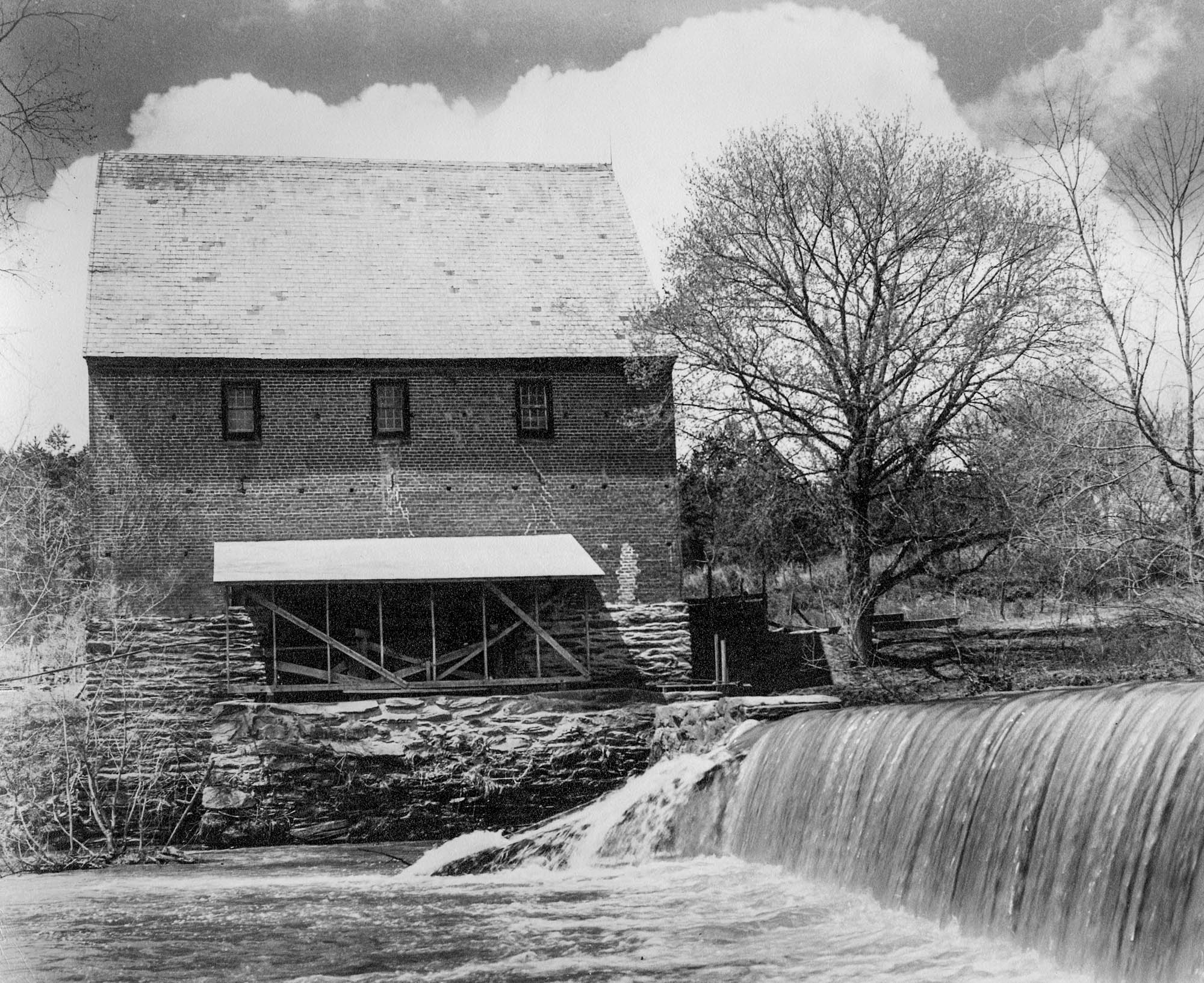
Date: 1940s
Image Number: RM02cdRM01, RM03cdRM01
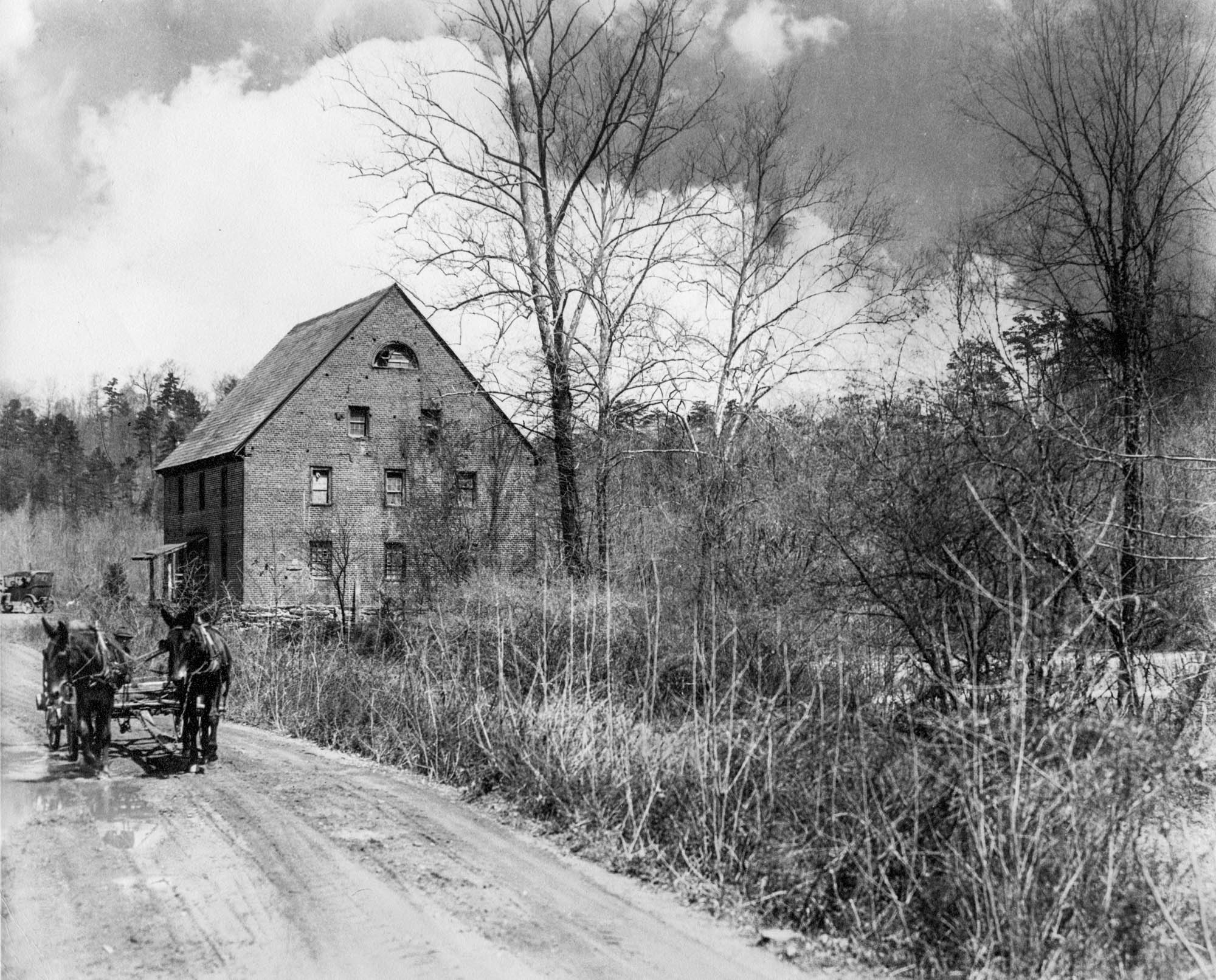
Jefferson Mills, located on the Hardware River approximately three miles northeast of Scottsville, was built about 1800 and is a brick structure with four floors supported by huge handworked wooden beams.
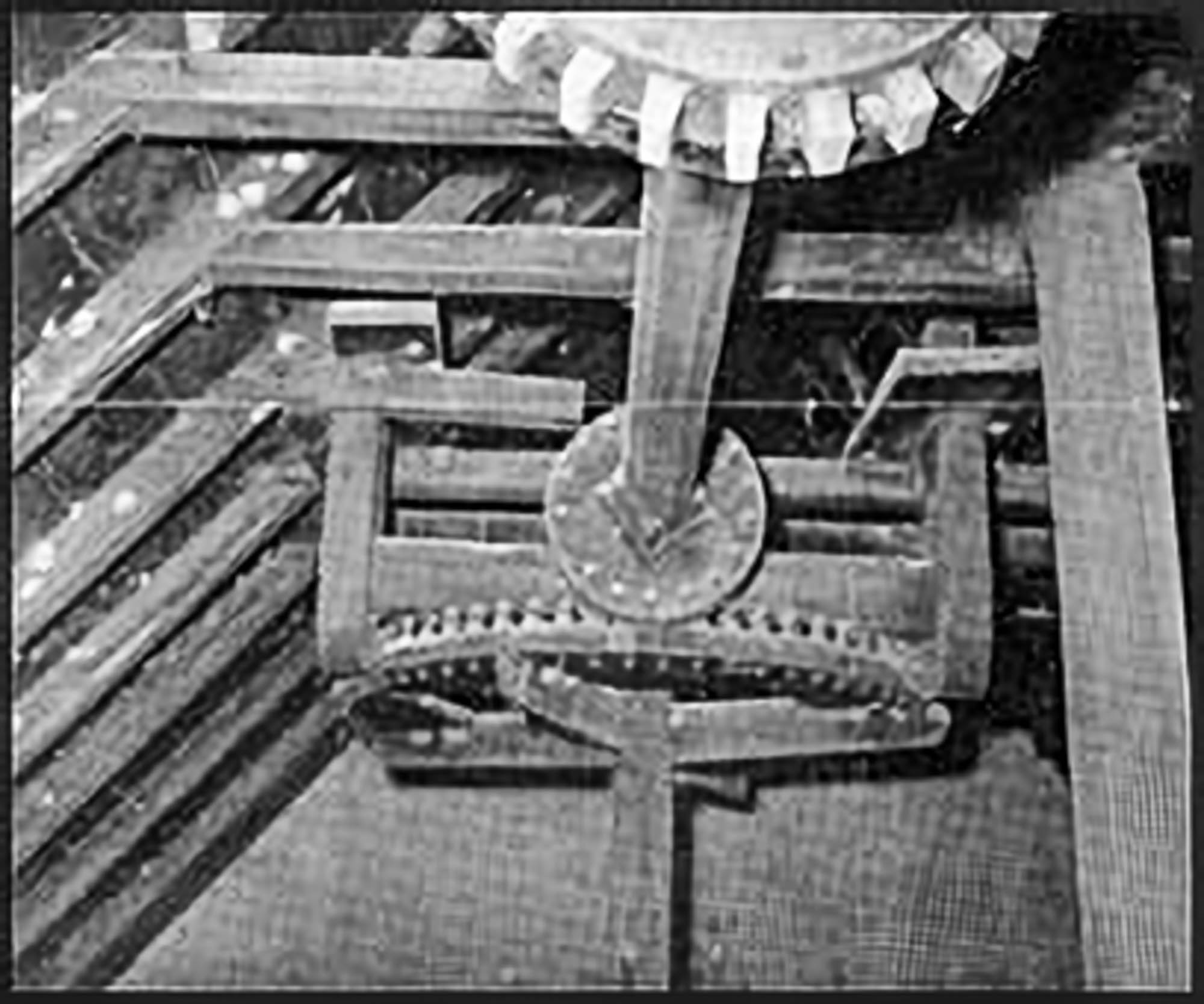
The mill originally was run by an overshot wheel that was fed from a stone dam twenty feet above the riverbed. Jefferson Mills’ original machinery, shown below, was handmade of wood and continued to serve the mill reliably right up to its last working day.
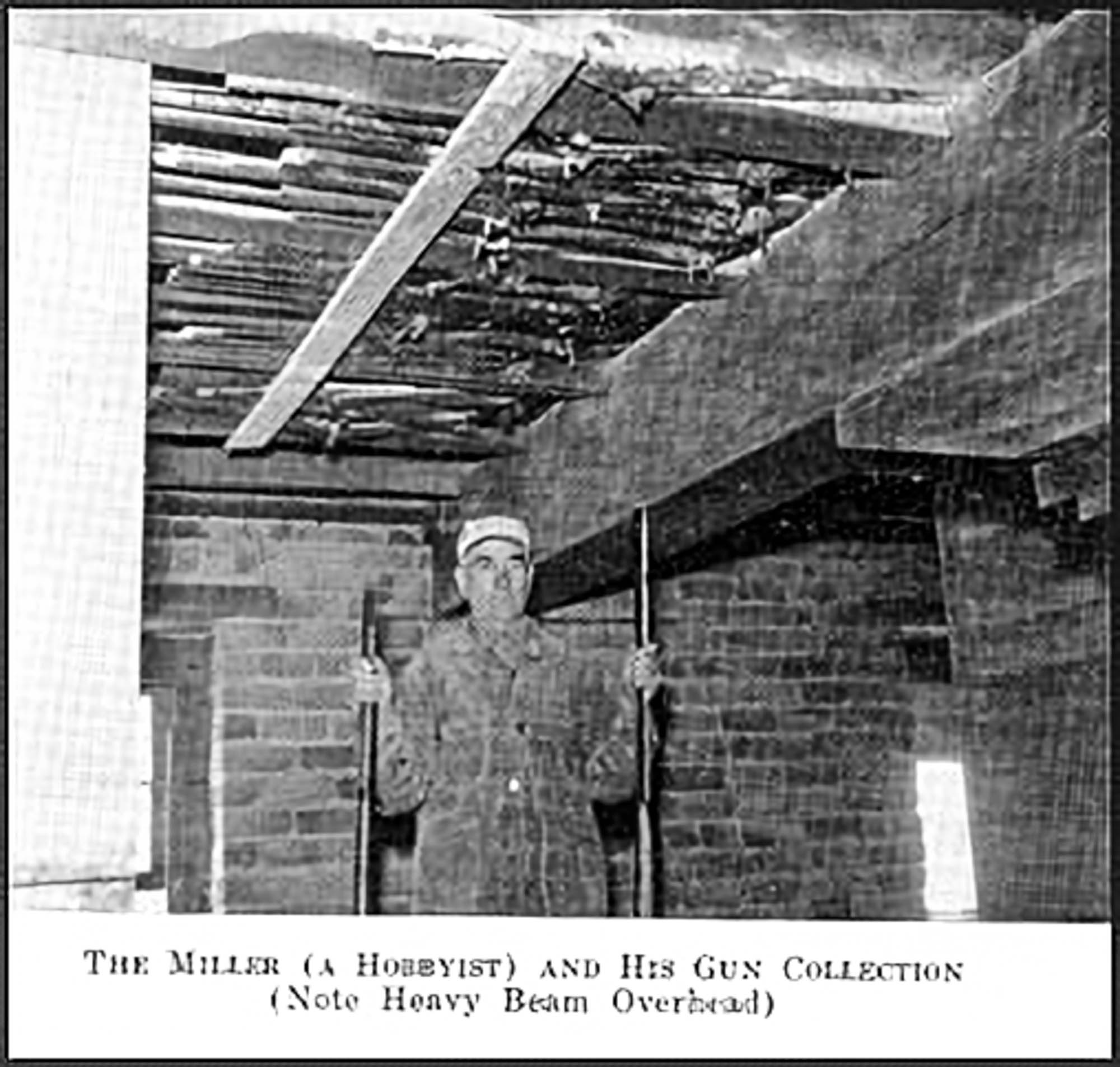
Previously known as Albemarle Mills, the mill was sold to Peter Fields Jefferson on January 28, 1857, and renamed after its new owner. In May 1919, William Thomas Moulton purchased Jefferson Mills and operated it with his son, John Adkins Moulton. Jefferson Mills was a working mill until 1945 when the last miller, William Williams (shown below), retired.
The Moultons opened a flour, feed, and seed store called ‘Jefferson Mills’ on Main Street in Scottsville and located in the old Canal turning basin across from today’s Scottsville Museum. In this 1941 photo at left, John A. Moulton stands beside his delivery truck in front of the store; to his left is the Pitts Chevrolet garage with just the roof of the Canal Warehouse (then known as the Farmer’s Exchange) showing behind it.
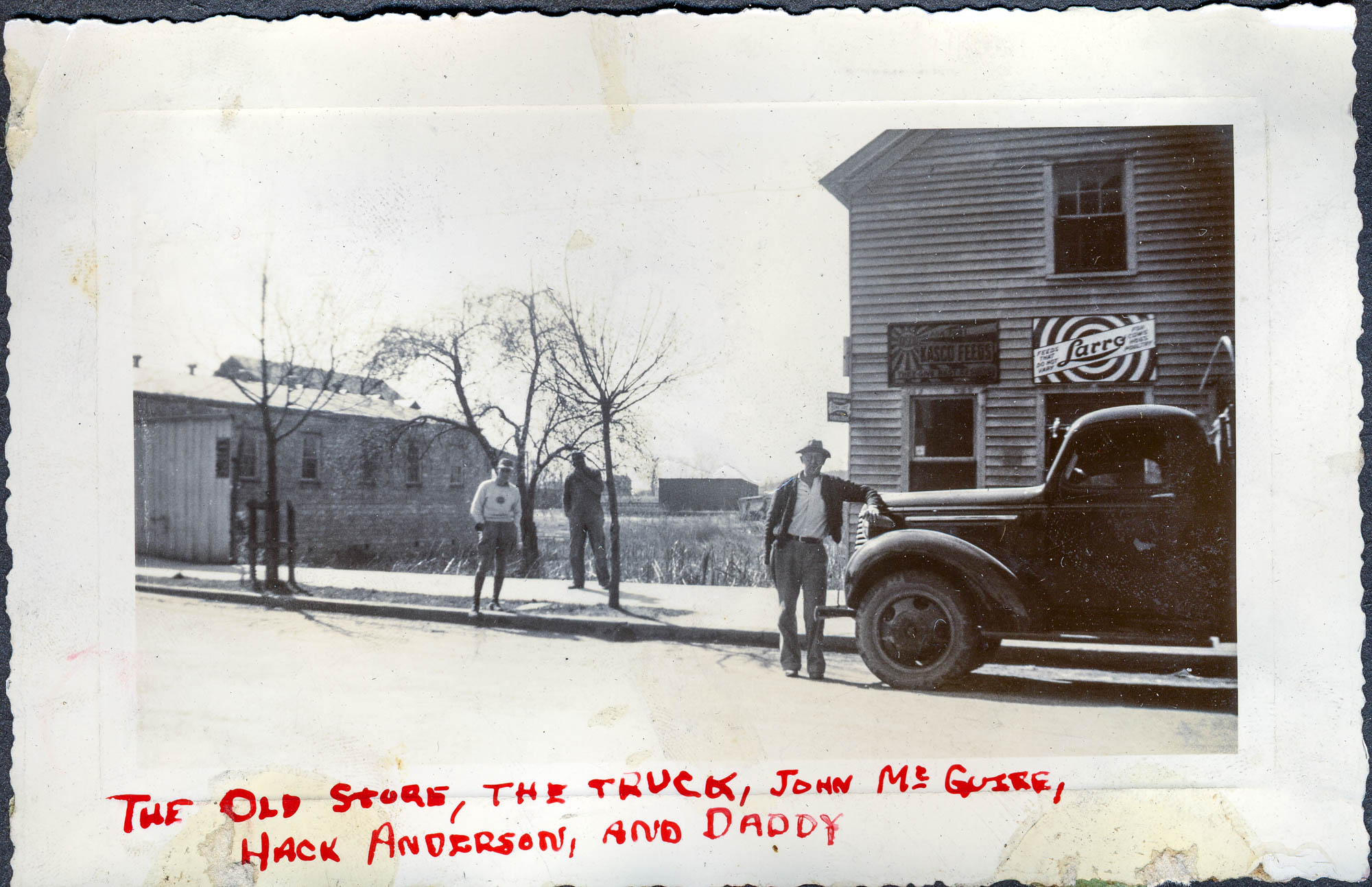
The mill store sold flour, cracked corn, and Larro and Kasco farm feeds. Because this store flooded whenever Mink Creek overflowed, the Moultons later moved it to sites on higher ground. Other Jefferson Mills store locations included the old Braid Factory across from Dr. Stinson’s home on Valley Street and on West Main Street where the Post Office was once located.
In August 2021, Jefferson Mills applied for and received a permit to modernize, “repowering” its hydroelectric system. Let It Go, LLC, that oversees the operation, is building a fish passage for American eels and sea lampreys. The company is also replacing the turbines with ones that are safer for fish who get sucked into them. “I think they are making it better than the existing dam,” said Bill Fritz, development process manager for Albemarle County.
The masonry dam is nine feet tall from the river bottom and 140 feet wide–the width of the river. “This dam is totally amazing,” said Joseph Head, a civil engineer with Natel Energy. “These guys that built the dam did it by hand 200 years ago with just rock and mortar, and it’s still there. If we’re messing with the dam, we have a standard to meet here.”
Most mills have been dismantled by 2022, but a few are still working, grinding wheat and corn. Check out Woodson’s Mill on Piney River for some quality stone-ground products!
These photos of Jefferson Mills are part of the Randolph Harris Moulton collection. Ranny resides in Macon, Georgia, and is the grandson of William Thomas Moulton and son of John Adkins Moulton. In 1930, Ranny was born on the floor above the Jefferson Mills store on Main Street.
Copyright © 2018 by Scottsville Museum
Top image located on: Capturing Our Heritage, CDRM01
RM02cdRM01.tif
RM02cdRM01.jpg
RM02cdRM01.psd
Image at right located on: Capturing Our Heritage, CDRM01
RM05cdRM01.tif
RM05cdRM01.jpg
RM05cdRM01.psd
Image at left located on: Capturing Our Heritage, CDRM01
RM04cdRM01.tif
RM04cdRM01.jpg
RM04cdRM01.psd
Below image located on: Capturing Our Heritage, CDRM01
RM03cdRM01.tif
RM03cdRM01.jpg
RM03cdRM01.psd
Leave us a comment or share your story.