
-

Auto Endurance Test on Valley Street, 1914

Auto Endurance Test on Valley Street, 1914; Image Number: RollTwoNeg20A Dr. L.R. Stinson owned the first car in Scottsville, a two-cylinder, bright-red, 1910 Maxwell. Soon these ‘motorized carriages’ were rattling the plank floor on the new town bridge. Cars altered Scottsville’s way of life greatly, wiping out the ferry, carriages and carts, and the blacksmith shop and stable on the corner of Valley and Main Streets.
See image below as a guide to the identities of several people in this photo:
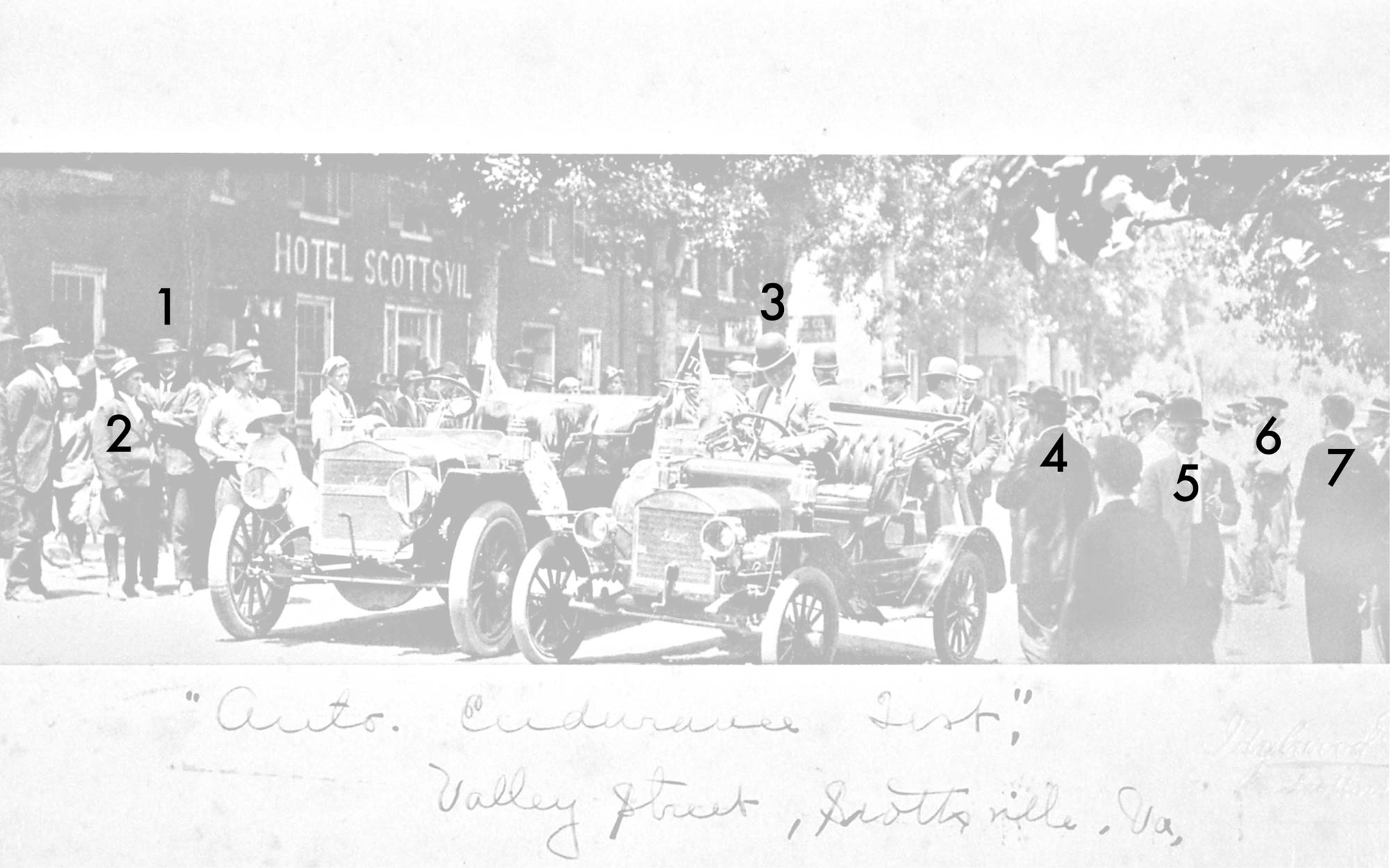
(1) Jackson Beal, Mayor of Scottsville for 25 years and a prominent businessman who owned the Beal Building on Valley Street. He married Mary Emma Bledsoe of Fluvanna Co., Virginia, and lived at Old Hall on Harrison Street.
(2) George Tapscott.
(3) Dr. L.R. Stinson of Buckingham Co., Virginia, who graduated from UVA’s Medical School and around the turn of the century and set up his practice in Scottsville.
(4) Wilbur Dameron.
(5) David Pitts, President of the National Bank on Valley Street and a member of the Virginia General Assembly.
(6) Mr. Jones.
(7) Gilbert Bell.
(8) Benjamine Dorrier.Copyright © 2018 by Scottsville Museum
Image Located On: Capturing Our Heritage, CD3
RollTwoNeg20A.tif
RollTwoNeg20A.jpg
RollTwoNeg20A.psd -

The Postcard Collection
Before 1907, the U.S. Post Office did not permit writing a message on the address side of postcards. For that reason, many U.S. picture postcards mailed before then had messages written across their fronts.
Postcards with a divided back finally were permitted in the U.S. in March 1907; addresses were to be written on the postcard’s right side, and messages on the left. At that point in American history, the postcard hobby quickly became a public addiction, and publishers produced millions of cards in this era.

Photographers like Scottsville’s William Burgess earned a good living by photographing local scenes and people to be printed as postcards via a lithographic process. Burgess traveled all over Central Virginia to take such photographs and to sell his postcards to local stores.
When Burgess died in 1935, his estate contained over 485,000 postcards of various Virginia scenes and people. Some of these extant Burgess postcards are shown below and can be distinguished from other photographers’ work on this webpage by the ‘W.E. Burgess’ or ‘Idylwood Studio’ markings that Burgess usually put on the front of his postcards.
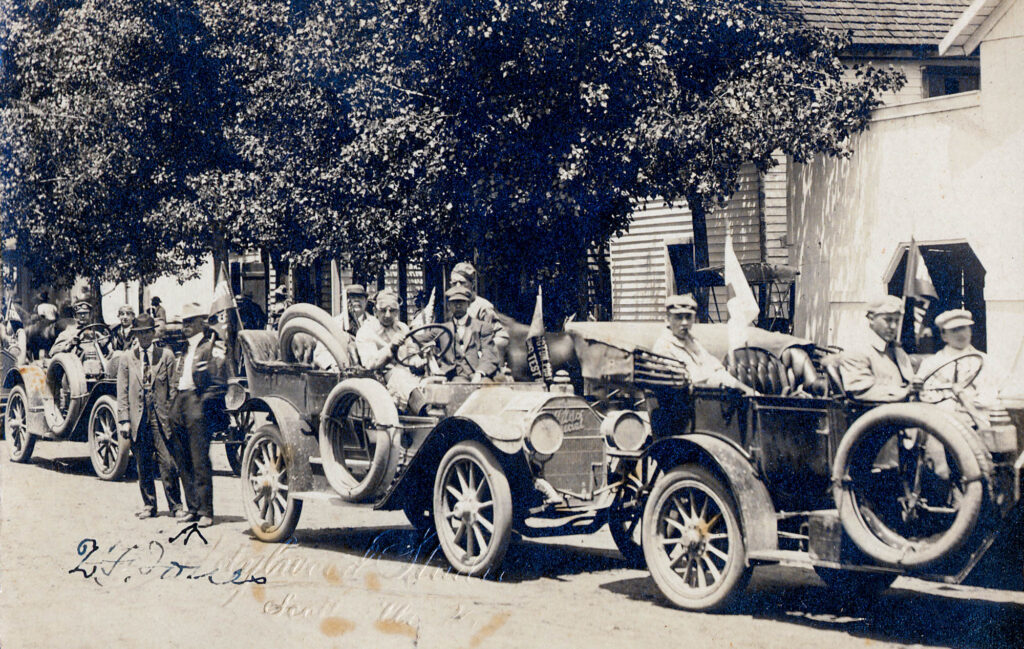
Cars on Parade • Image Number: B51bcdB16 
C&O Railway Station, Scottsville • Image Number: B51dcdB16 
Birdseye View of Scottsville • Image Number: B56dcdB16 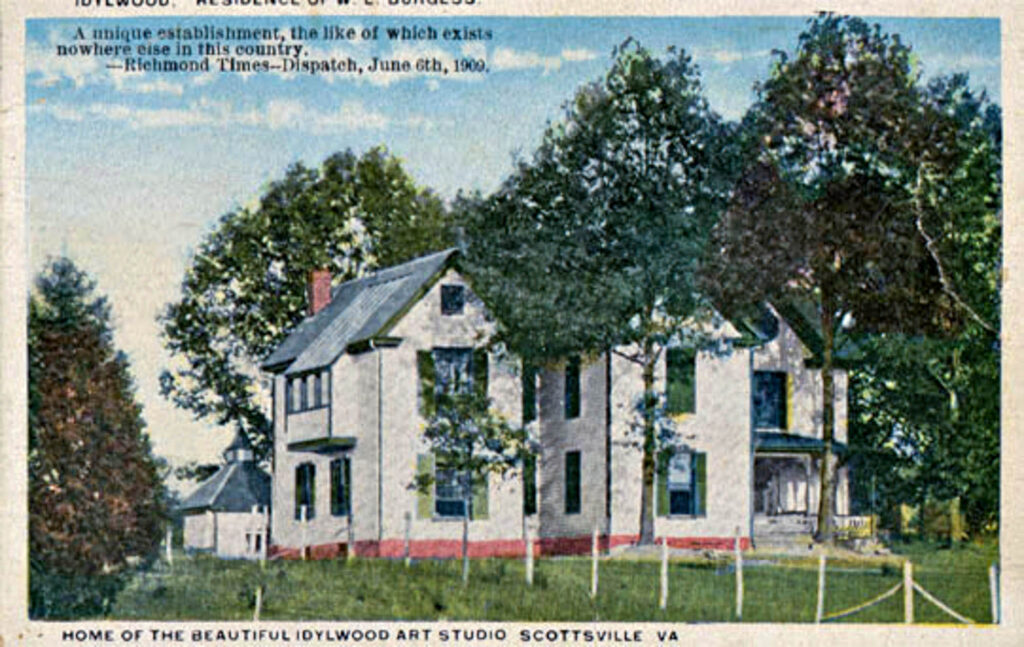
Idylwood • Image Number: B53acdB16 
Scottsville Bridge • Image Number: B53bcdB16 
Scottsville High School on West Main • Image Number: B53ccdB16 
Horseshoe Bend and Valley Street, Scottsville • Image Number: B53dcdB16 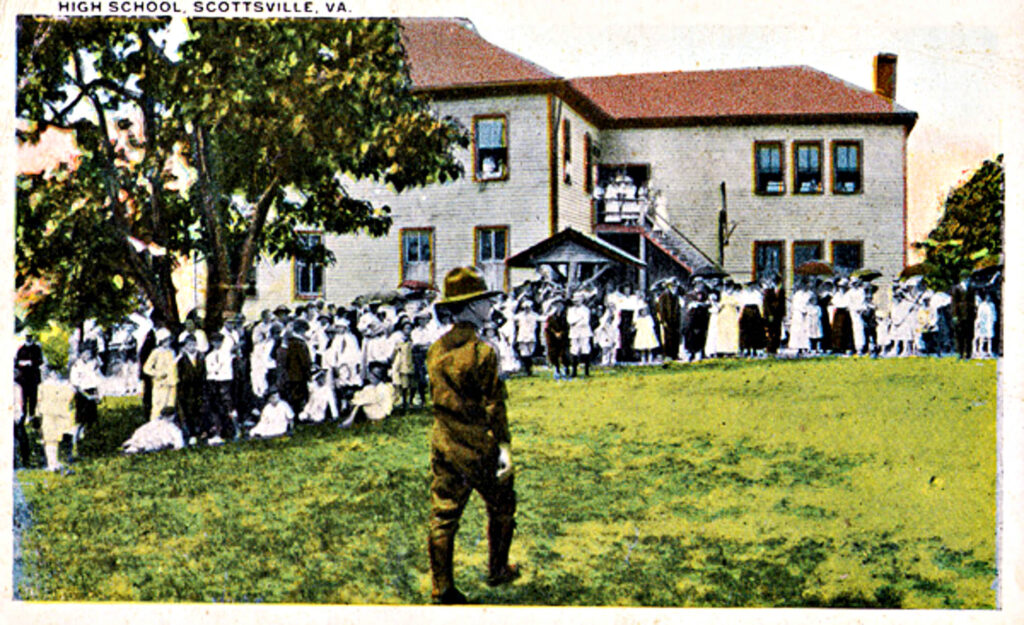
Scottsville’s ‘School on the Hill’ • Image Number: B54bcdB16 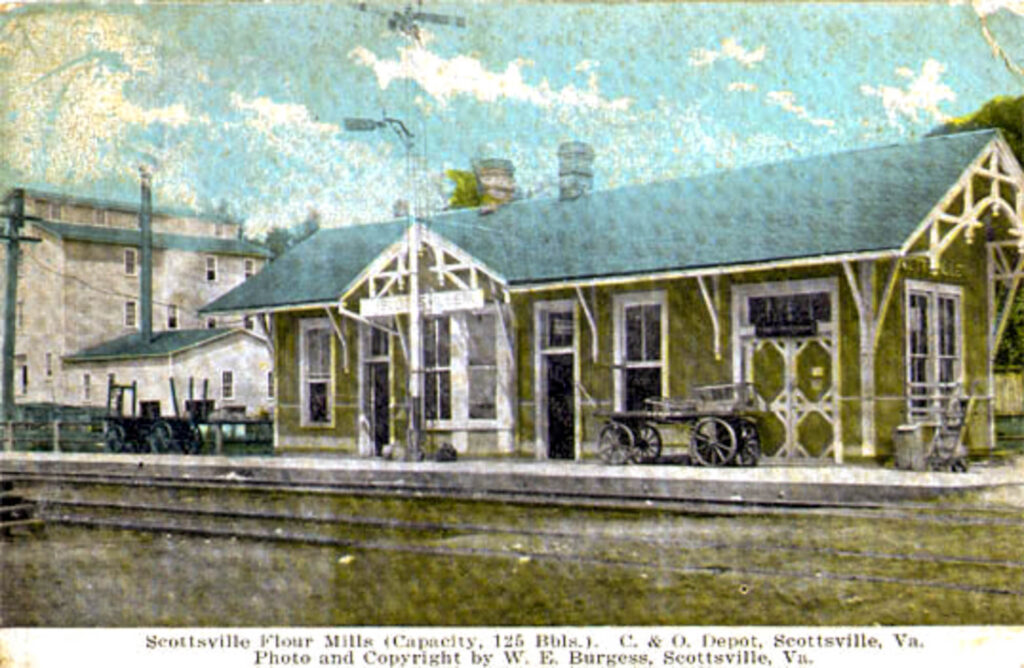
Scottsville Flour Mills and C&O Depot • Image Number: B54dcdB16 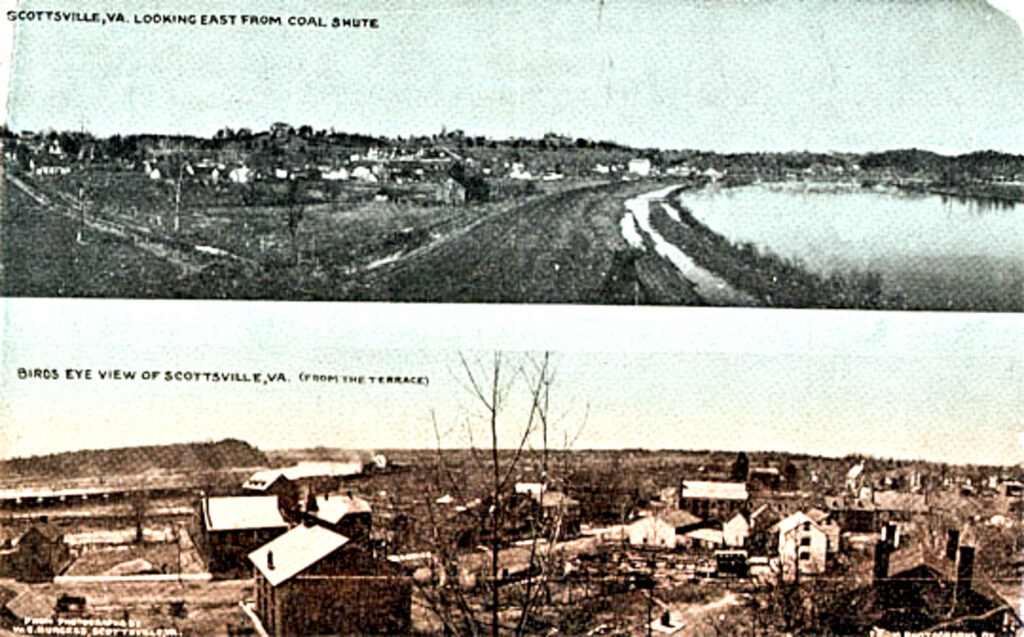
Bird’s Eye View of Scottsville • Image Number:B55ccdB16 
Birdseye View of Scottsville • Image Number: B56dcdB16 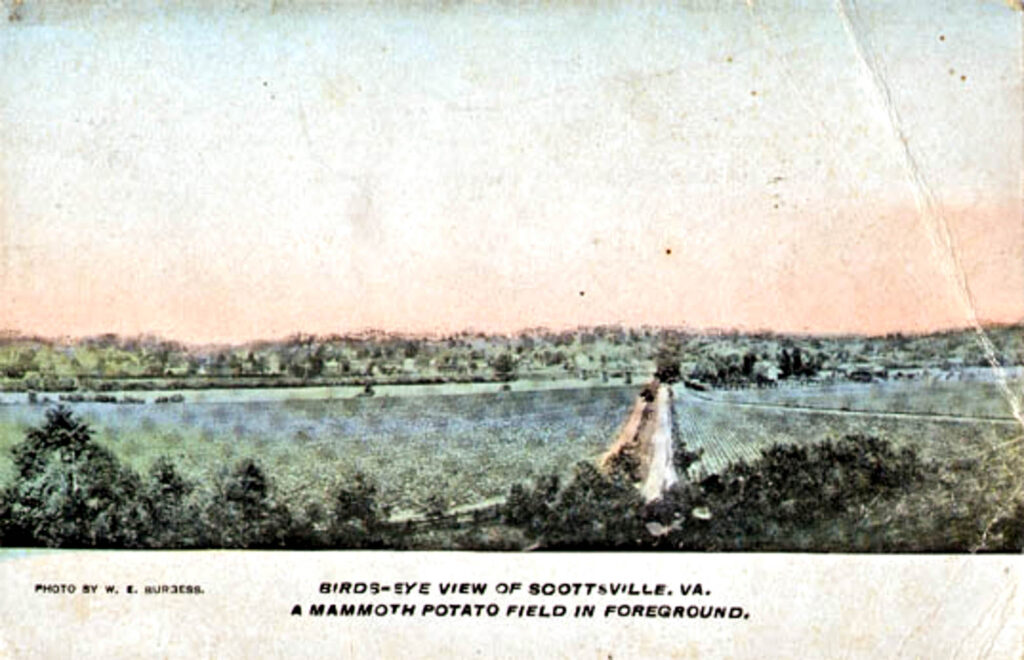
Birdseye View of Scottsville Over a Mammoth Potato Patch • Image Number: B57acdB16 
Pine Knot, Hunting Lodge of Theodore Roosevelt ª Image Number: B68acdB16 
Confederate Reunion in Scottsville, 1908 • Image Number: B73cdB17 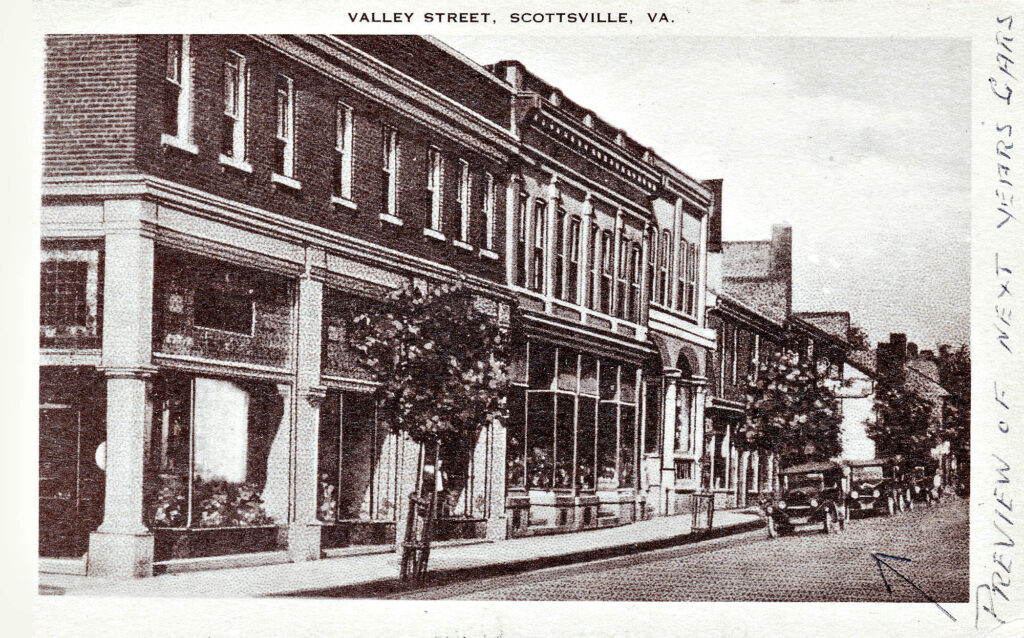
Valley Street in Scottsville • Image Number: B111cdB17 
Horseshoe Bend of the James River, Scottsville • Image Number: B112cdB17 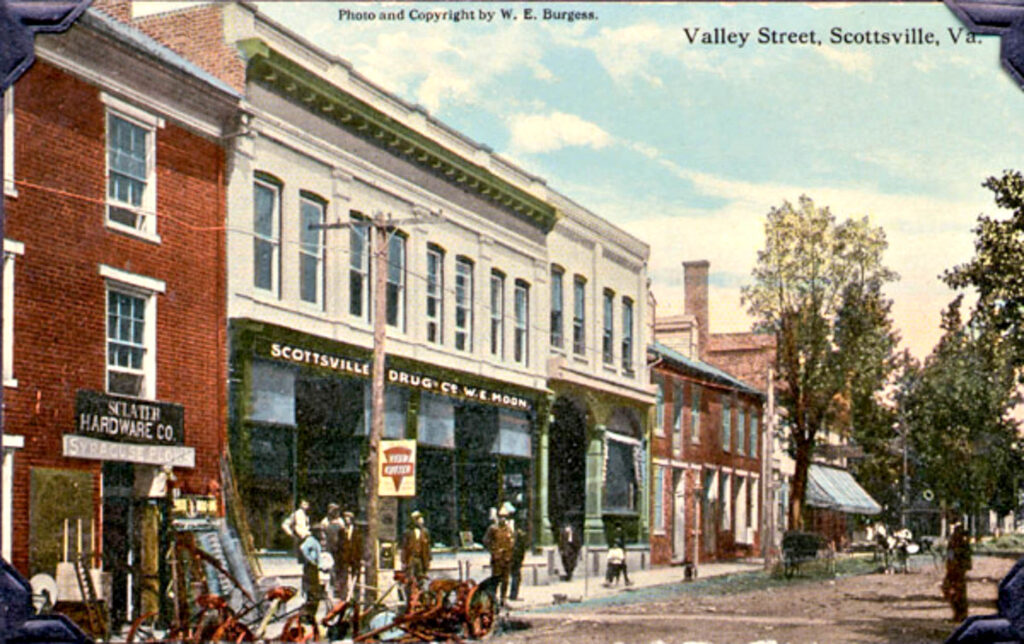
Valley Street in Scottsville, 1907 • Image Number: H136cdME04 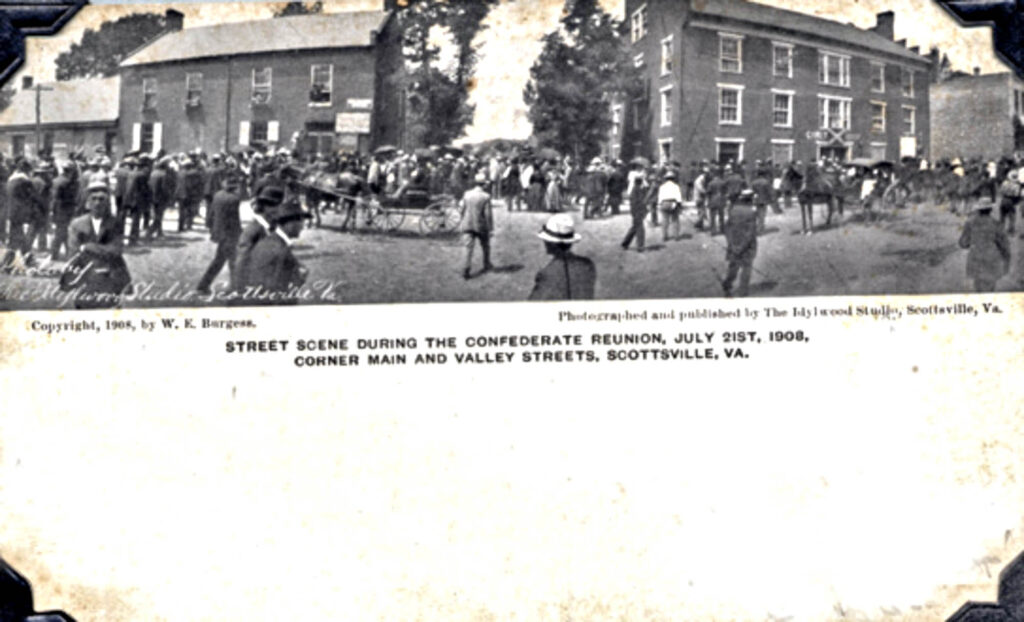
Confederate Reunion in Scottsville, 1908 • Image Number: J87cdE6 
Hatton Ferry, Est. 1870 • Image Number: RM09cdRM08 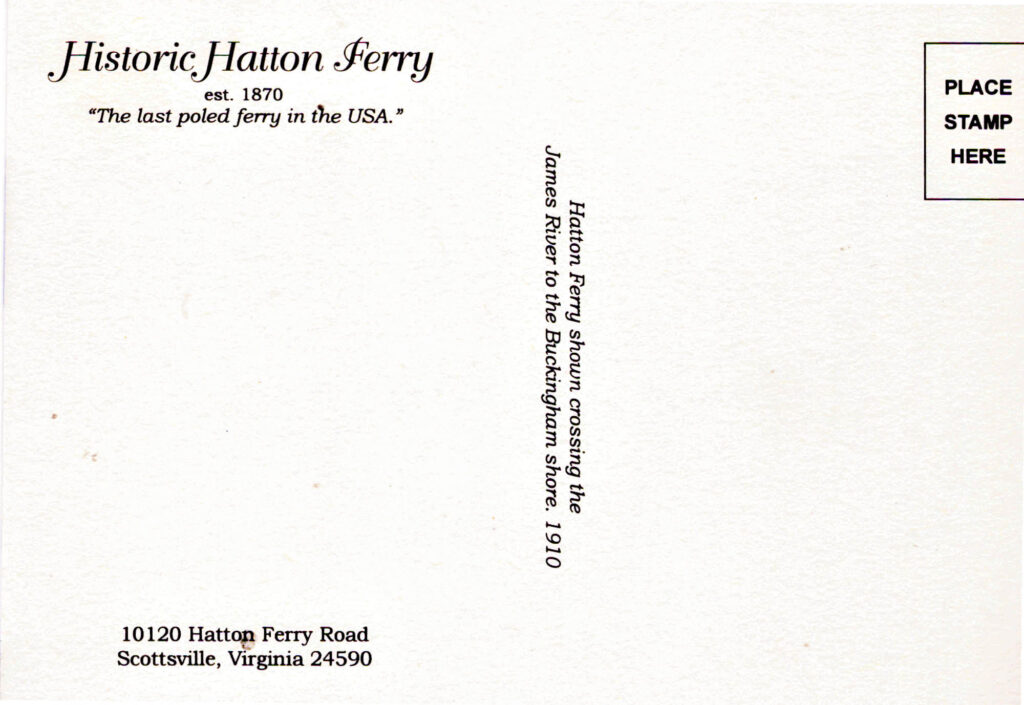
Historic Hatton Ferry (back) • Image Number: RM09cdRM08HattonFerry_back 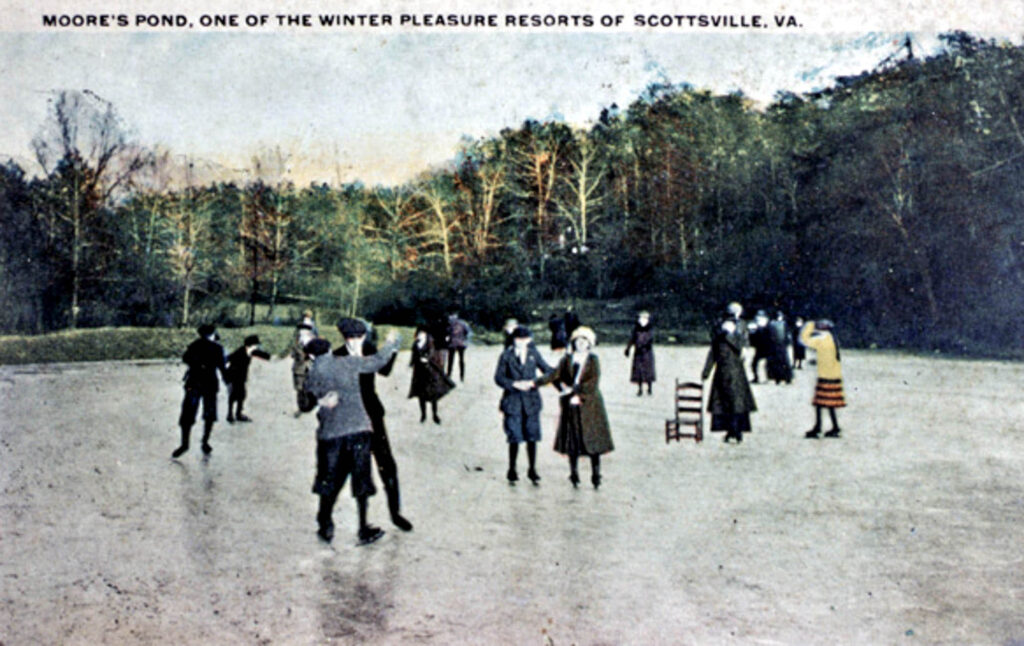
Moore’s Pond • Image Number: Roll8Neg4 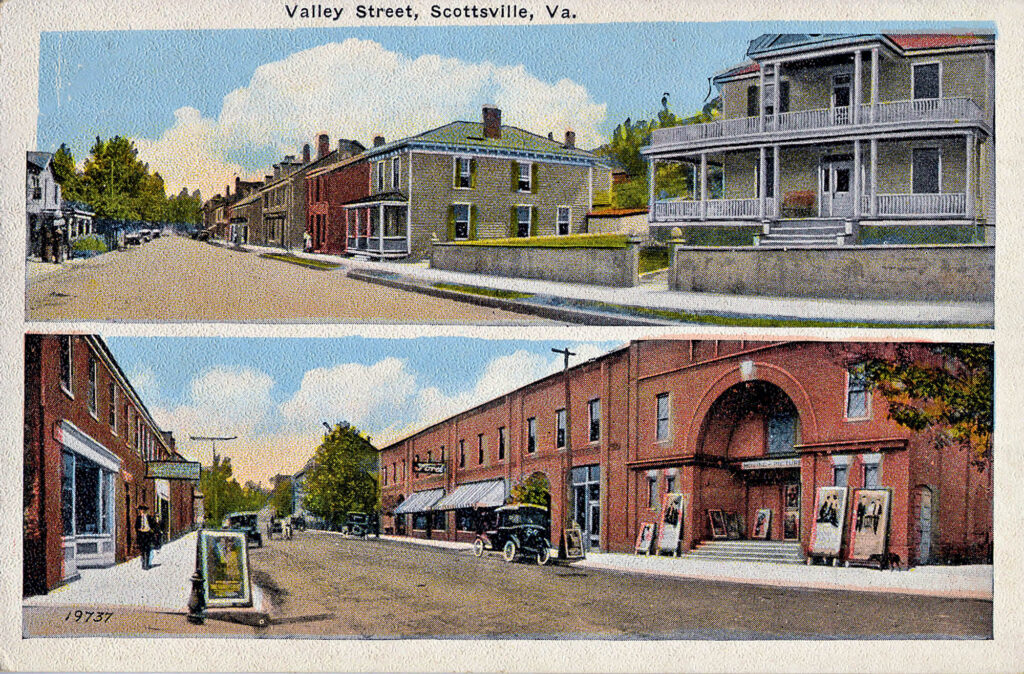
Valley Street, Scottsville • Image Number: Roll8Neg24A 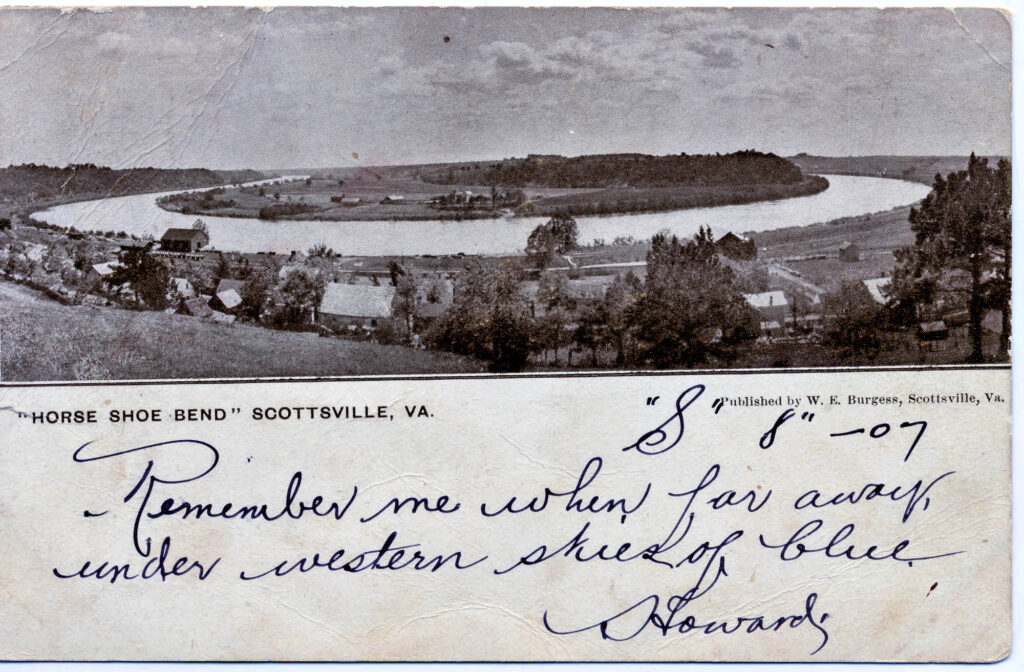
Horse Shoe Bend, Scottsville • Image Number: WP03cdWP01 
A View of Scottsville from Drever’s Hill • Image Number: WP05cdWP01 
C&O Railway Bridge, Bremo, VA • Image Number: WP07cdWP01 
Crossing of C&O, Seaboard and Southern Railwasy – Richmond, Va. • Image Number: WP09cdWP01
Postcards
Make a Donation
Recent Newsletters
Museum Shop
Walking Tour
For Kids
Topics
- 1700s (5)
- 1800s (19)
- 1900s (17)
- 2000s (1)
- Architecture (18)
- Burgess Collection (8)
- Churches (1)
- Civil War (4)
- Colonial Era (1)
- Commerce (20)
- Communities (2)
- Events (3)
- Twilight Tours (2)
- Exhibits (0)
- Featured (5)
- Floods (4)
- Genealogy (1)
- Cemeteries (0)
- Ledgers (0)
- Oral Histories (2)
- People (20)
- Postcards (2)
- Revolutionary War (0)
- Schools (1)
- Scottsville Sun (0)
- Transportation (23)
- Automobiles (5)
- Canals (7)
- Horse (4)
- Trains (7)
- Uncategorized (1)
- Walking Tour (11)
- World War I (0)
- World War II (2)