
by Adam Robinson
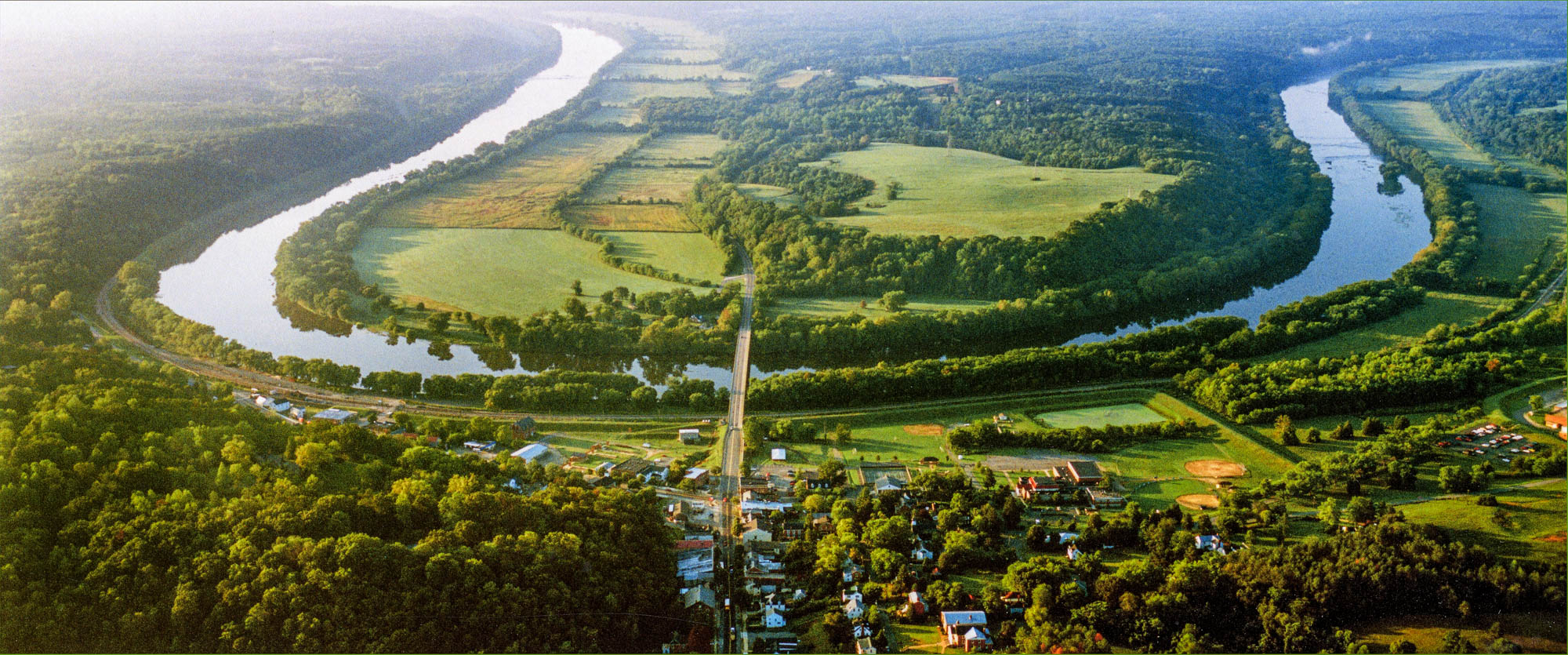
Photographer: Robert Llewellyn
Date: ca. 1990
Image Number: RL01cdRL01
The magnificence of the James River gives metaphors pause. To navigate its waters as fireflies gather on the cusp of a July evening, to thread a course through an autumn colonnade of poplars dipped in molten gold, is to understand why this river carries the lifeblood of Virginia within its embrace. And if you listen carefully, beneath the river’s roar you might hear whispers of another time, voices of Monacan Indians and batteau captains and canal engineers, for the James River is a river flowing through time as well as space. After all, the foundations of Virginia’s history are built upon this river.
So, too, is the history of the town of Scottsville. Scottsville finds itself upon the Horseshoe Bend, an isolated meander of the James River, bounded for many miles to the east and west by relatively straight stretches of river. And while steep cliffs border the James River throughout much of the Piedmont, the Horseshoe Bend boasts gentle slopes on its northern and southern shores.
The town’s placement on this geographical oddity is no coincidence. Scottsville’s early settlers, the Monacan Indians, were drawn to the area’s fertile flood plains and the natural ford at the Horseshoe Bend. And when Albemarle County was established in 1744, the area that would one day become Scottsville was chosen as the location of the county’s courthouse, due to its position on this convenient ford of the river.
For the full article by Adam Robinson about why the James River bends at Scottsville, its impact on the town’s settlement, and success as a transportation center, download the PDF below, Why The River Bends:
Copyright ©2018 by Scottsville Museum
Leave us a comment or share your story.