

Text and photos by Barry Long
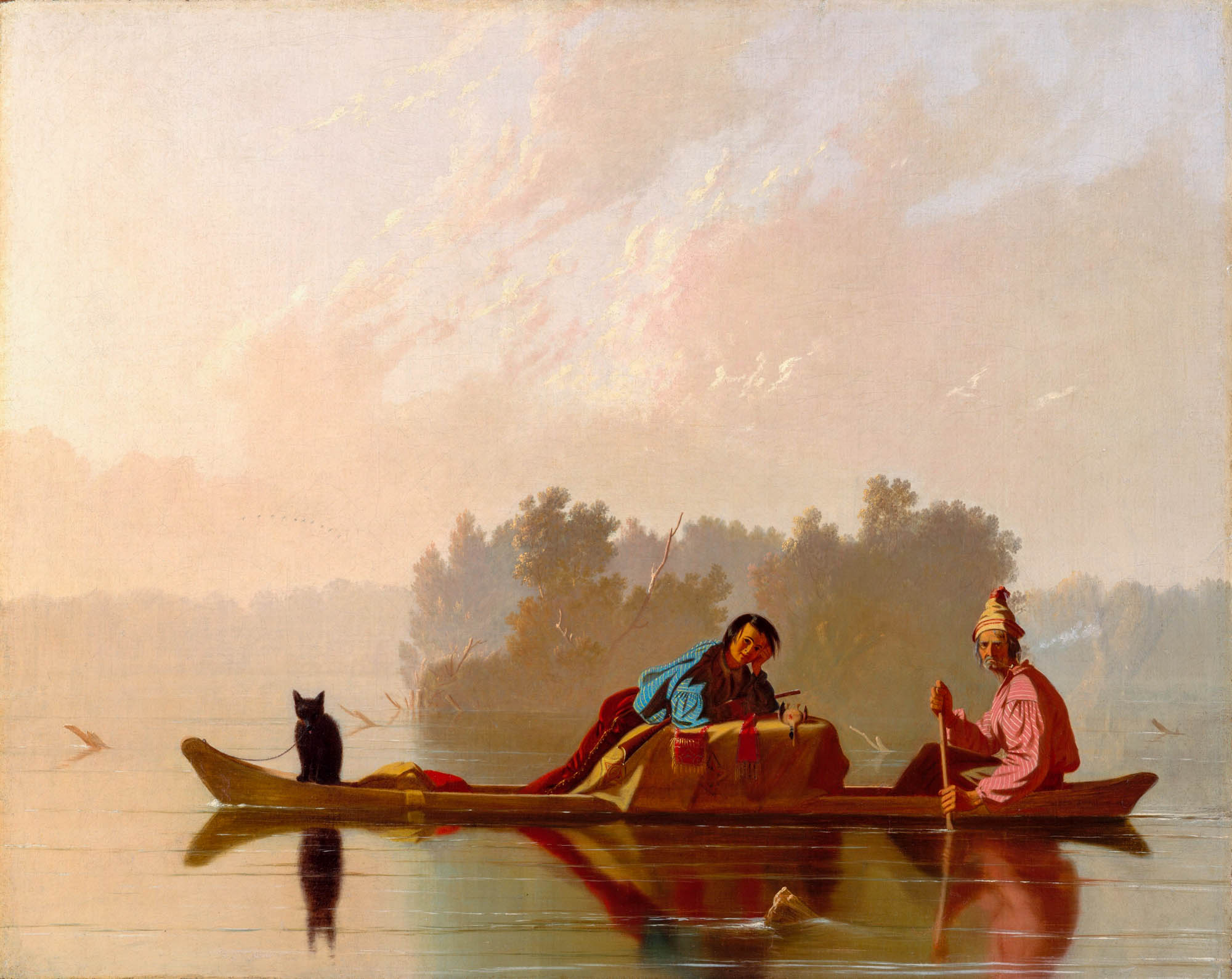
Public Domain via TheMet
The James River has been a watery highway of boat transportation since before John Smith sailed into its mouth in 1607, whereupon he was greeted by people traveling in dugout canoes. It remained the single most important avenue of transportation in the Colonies for hundreds of years, not only for moving people, but especially market goods and produce.
The life of a batteauman was lively, to say the least. All this river commerce went on essentially unsupervised, and the crews immediately gained a reputation for ribaldry and mischief.
Scottsville is an old town, on an old river. It’s been here on the northern bank of the James River since before the Revolutionary War. In fact, when King George sent his army to pay respects to the man who wrote him that nasty letter, the Declaration of Independence, Jefferson took the opportunity to indulge his interest in geology and made a hasty visit here to study the inside of a small cave in the bluffs by the river, until the coast was clear. He visited the town frequently, under more relaxing circumstances.

By the time Jefferson was hiding out in caves, tobacco had long been to Virginia what the coca leaf became to Colombia, and opium to much of the world throughout history – an addictive product, the economic engine that drove trade. Getting that tobacco to markets in Europe was of prime importance.
The soil along the coast was quickly exhausted by continuous tobacco cultivation, and rich lands to the west were soon cleared and in full production. But the farther inland you travelled to farm tobacco, the more costly it was to bring back to coastal ports for shipping.
Overland roads were rough and primitive, and tobacco – the main cash crop – was heavy. To get it to market, huge barrels called Hogsheads were packed with a half ton or more of dried tobacco. A pole driven through the middle served as an axle. Then the whole assembly was hooked up to a team of oxen, and a drover prodded them to tumble the contraption along dusty, muddy and rocky roads, up mountains, and down winding valleys, until the barrel could be rolled onto a ship in port at Richmond. Not only was travel slow and arduous but, as one might imagine, the quality of the product inside was not improved by the journey.
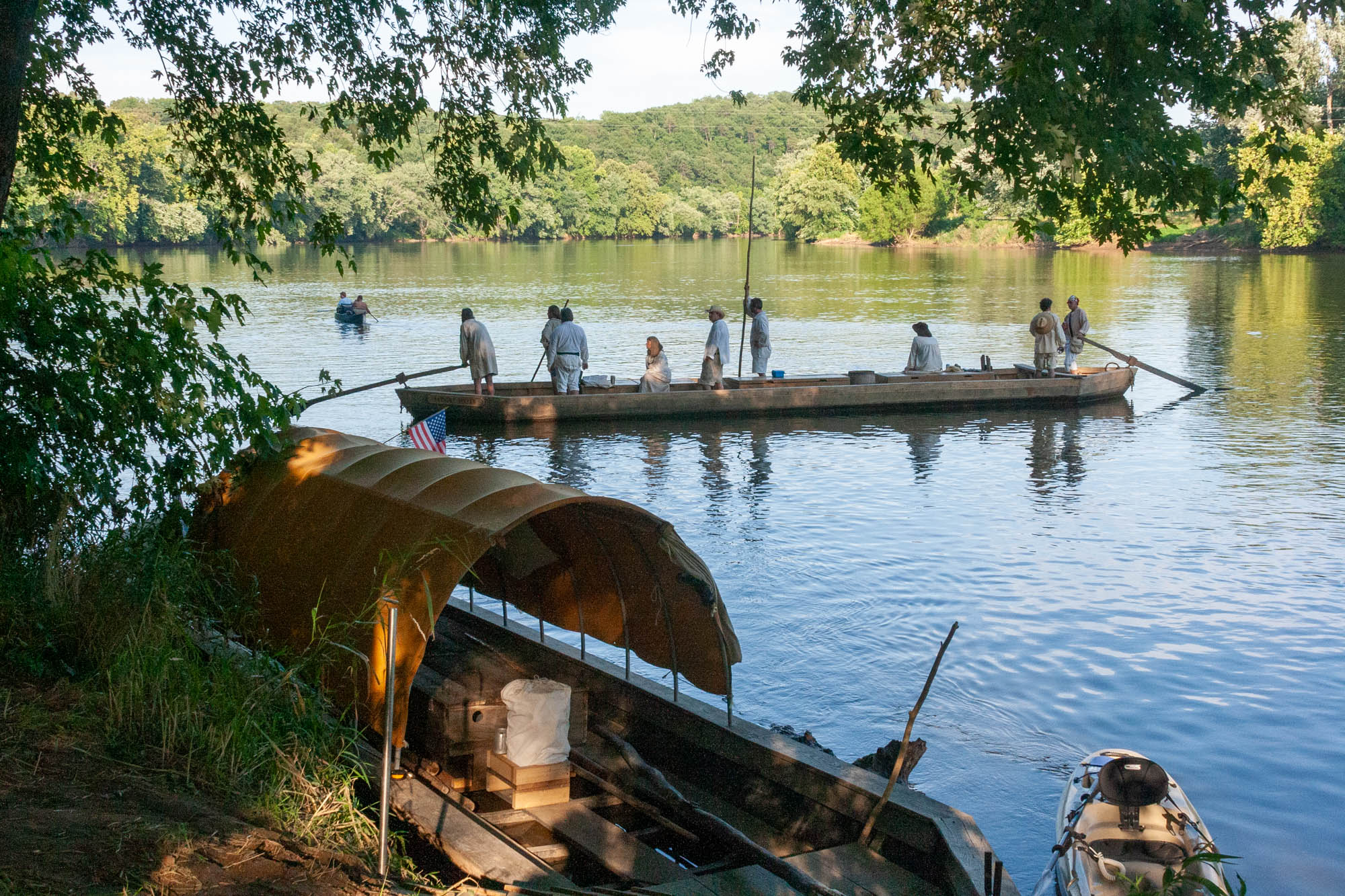
The James River Batteau was a solution to these problems, and it changed everything. Anthony Rucker, far from port in Amherst County, devised and built a large flat-bottomed boat he called a Batteau – a craft that revolutionized river transport and became the model for containerized shipping.
In 1775, Jefferson observed the launch of the first James River Batteau, and soon bought several for shipping his own goods from Monticello. Half a century later in 1821, with Jefferson’s help, Rucker was posthumously granted a patent for the Batteau boat design. By then Batteaux were used on all eastern North American river systems, from Alabama to New England.
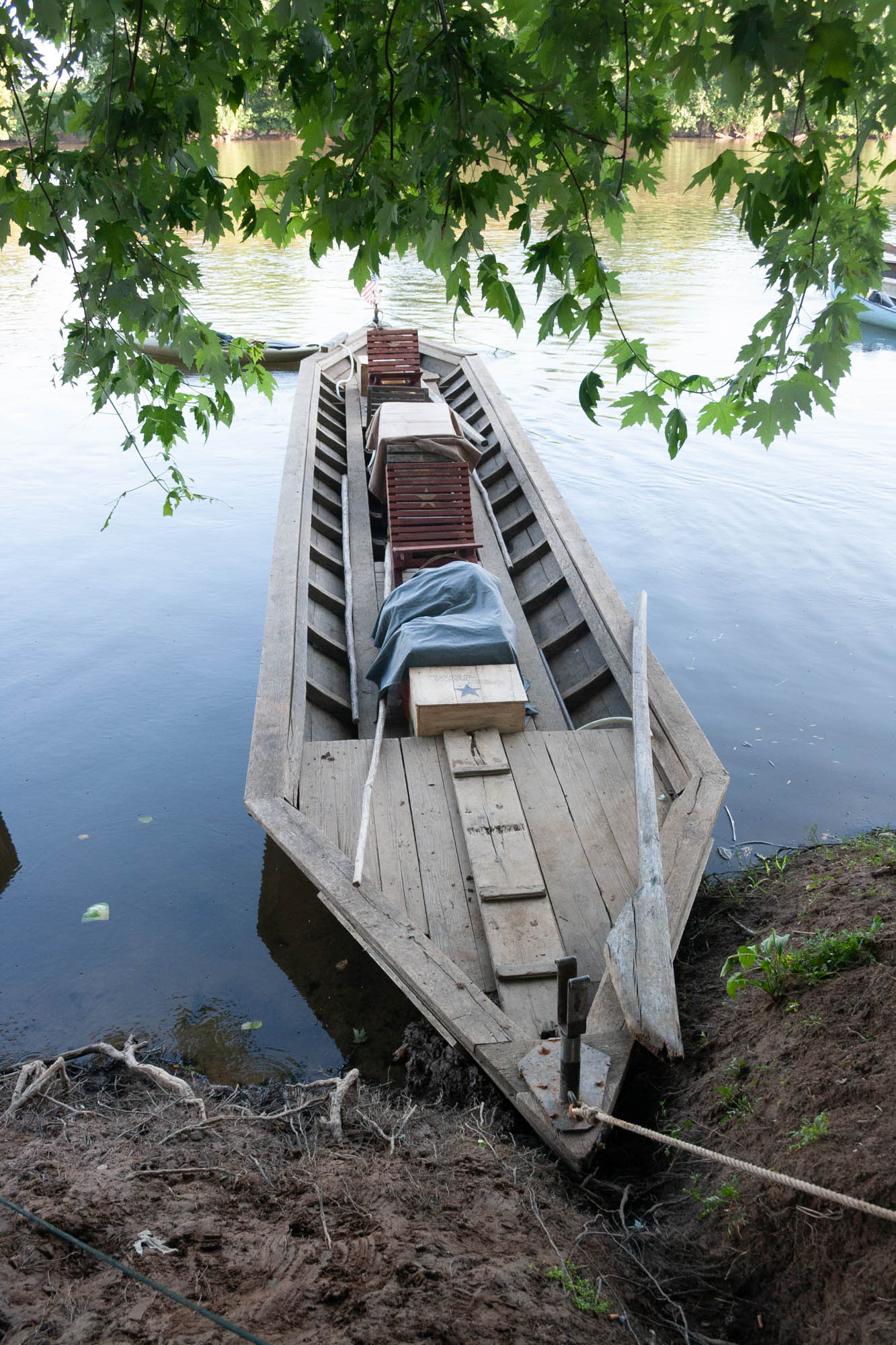
Batteaux were long, wider than canoes, and flat bottomed like barges. Made of stout planks, they could be built by carpenters and cabinet makers rather than skilled shipwrights. They averaged 60 feet in length and 6 feet wide.
Empty, they could float in less than 8 inches of water. Fully loaded with over 12 tons of cargo, they drew little more than a foot and half. To facilitate transport, the hogshead barrels were standardized to a common size, as was the breadth of the boats, so the barrels would fit snugly in the hulls. Rolled over toll roads constructed for the purpose, from as far away as Shenandoah Valley, they could be rolled right up into the batteaux and floated downriver. The closer you were to a river, the less you had to roll. Towns sprang up at landings all along river systems to take full advantage of it. Scottsville was in a prime location.
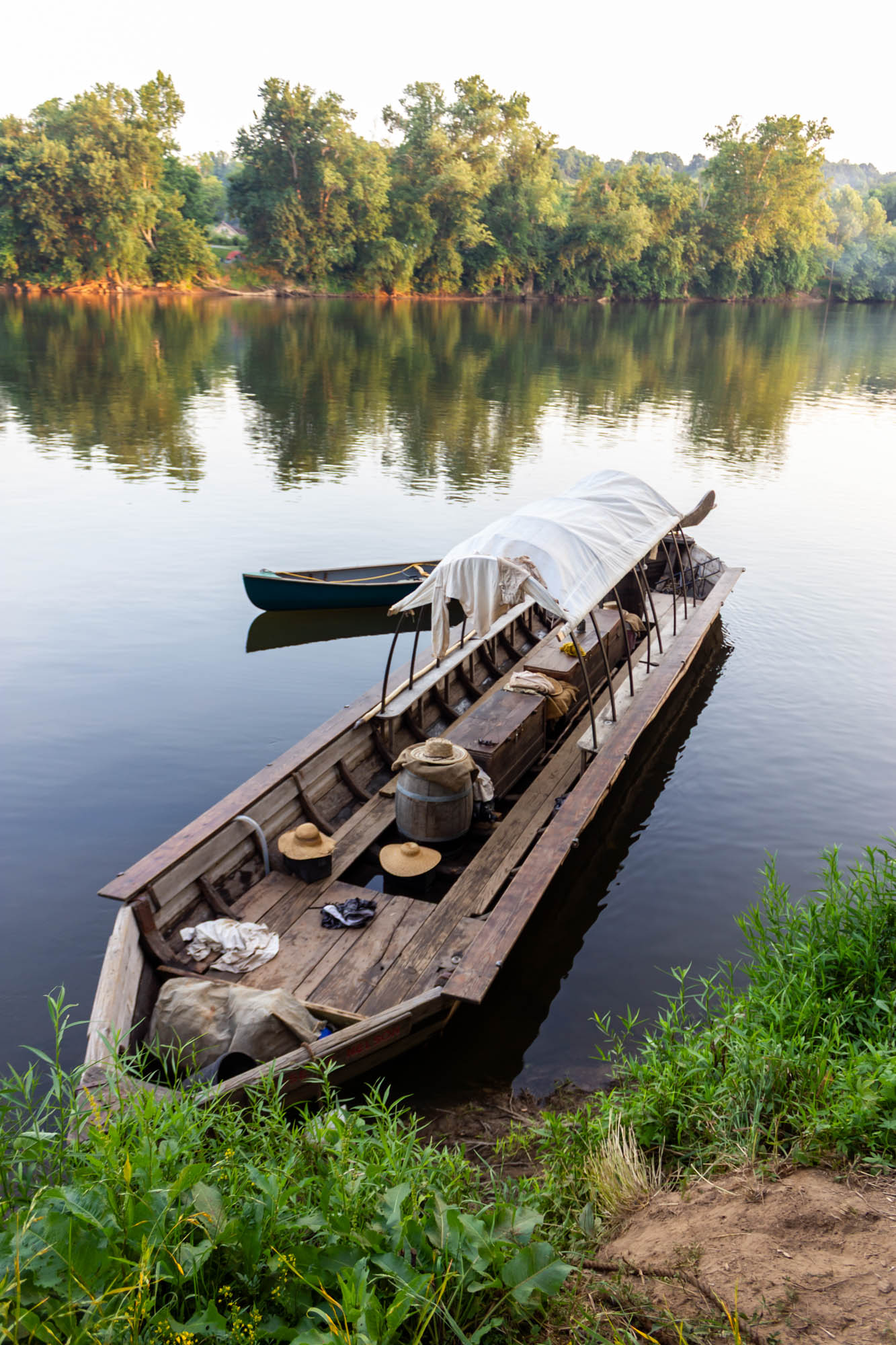
By the early 1800’s, 22,000 hogheads of tobacco a year were arriving in Richmond on Batteaux. The watertight barrels were also packed with all manner of goods and produce from farms in the Piedmont, particularly wheat, flour and whiskey.
Besides making Richmond the leading source of tobacco in the world, batteaux made the city the second largest source of flour on the continent. A flour mill on the wharves in Richmond was the largest brick building in the world at the time.
In addition to containerized shipping, the boats carried loose cargo, such as coal and iron ore from mountain mines, lumber from mills, bricks, nails, and slate shingles. Scarce finished goods from Europe were then hauled back upstream to the frontier.
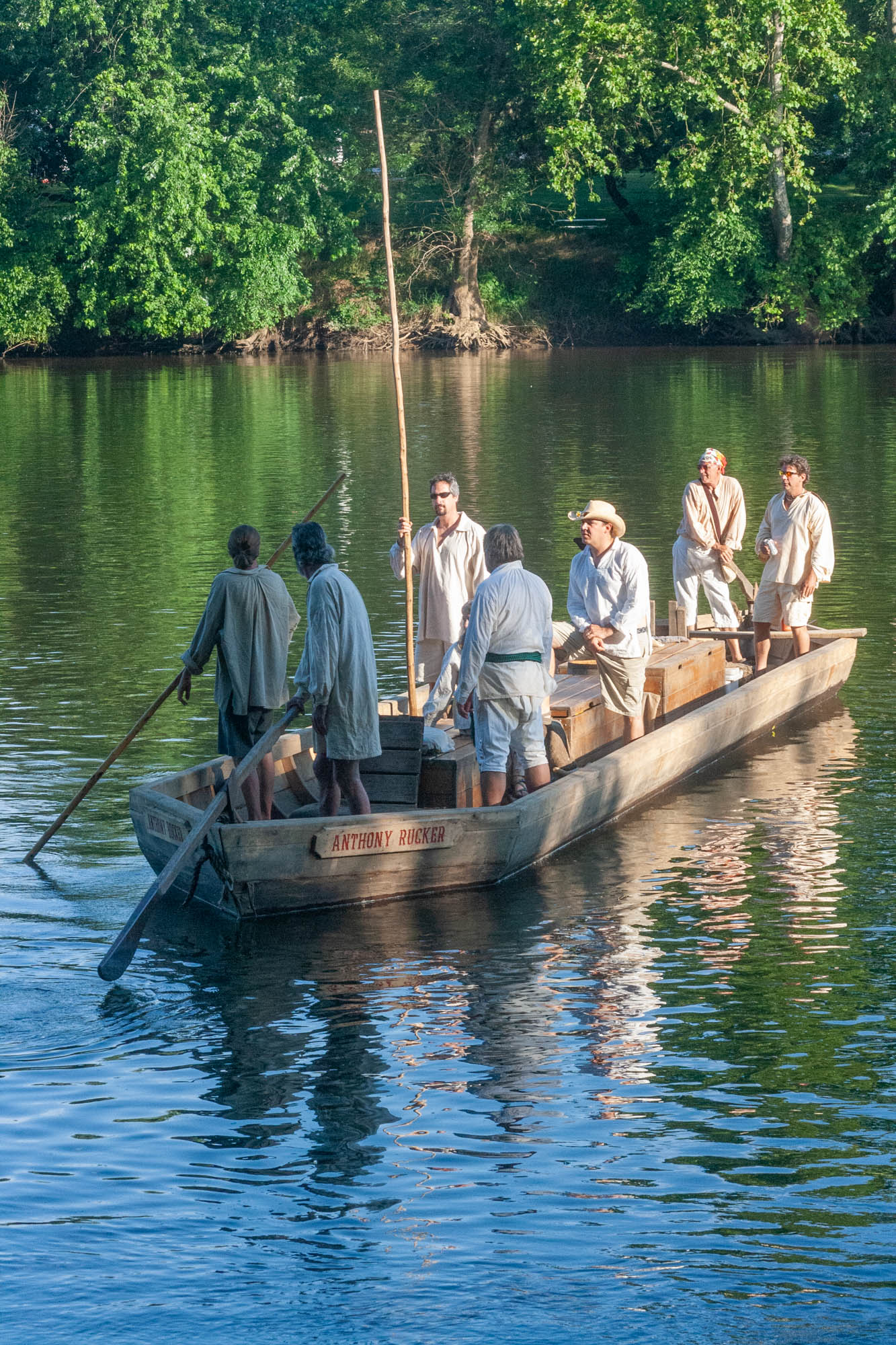
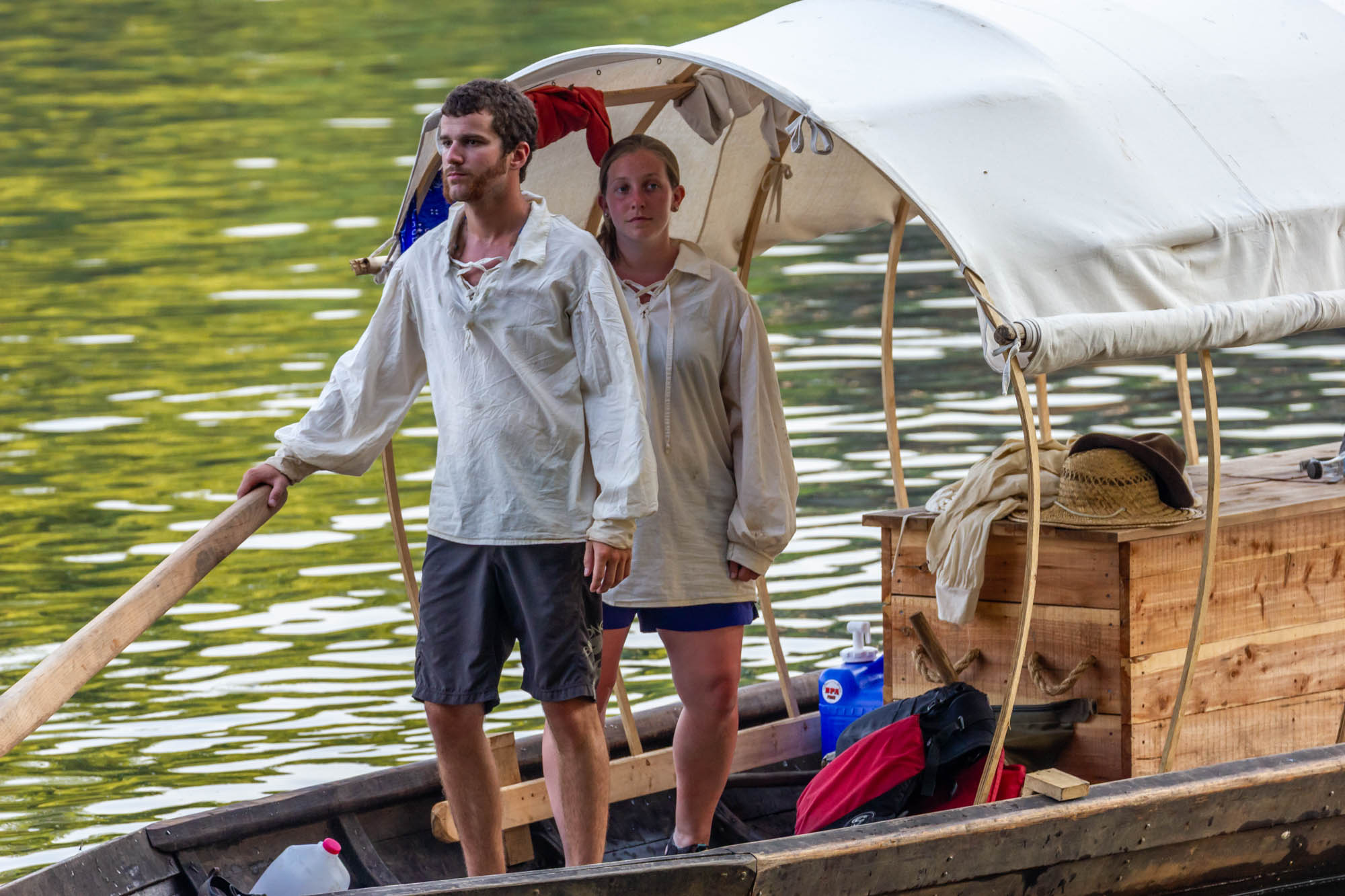
The boats typically carried a crew of three. One man steered the boats from the rear with a long oar called a sweep. Often a second sweep was mounted at the front so the boats could be steered from both ends. On the trip down, the other crew helped direct the steersman around obstacles and propelled the boat with long iron-tipped poles.

The loaded boats were easily floated downstream 100 miles to Richmond in three days when the water was up, provided they avoided snags and rocks, and navigated safely through various rapids – all of which frequently sank boats and drowned their crews. The trip back required at least 10 days, pushing the boats upstream with the poles.
In the early days, and on remote parts of the river, crews could sleep on the boats or tie up to the bank and camp ashore. As traffic increased, small towns and businesses sprung up along the route at good landings, both to serve landowners who had produce to ship, and to entice the batteaumen to spend their meager pay – or trade goods and services.
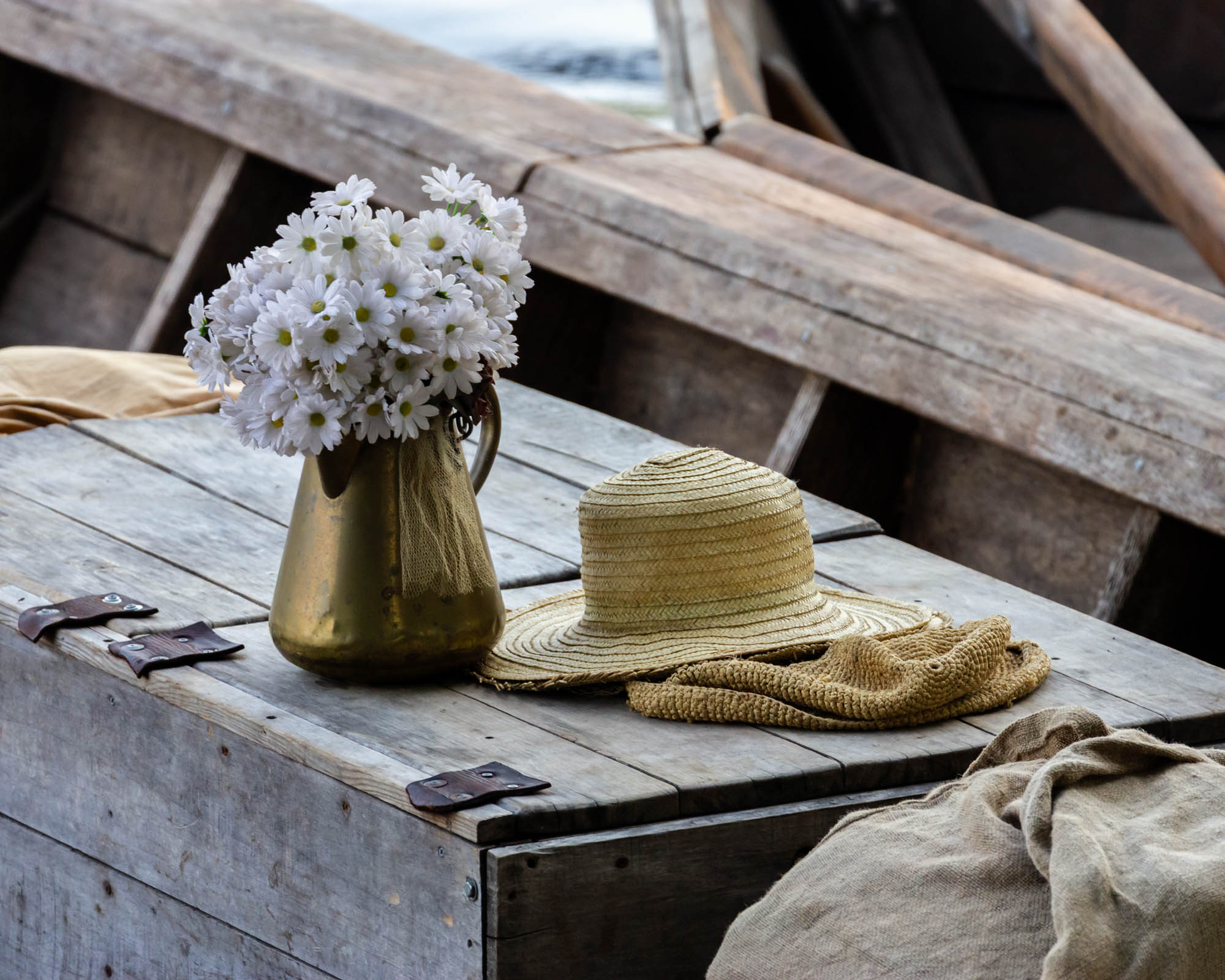

It was a pleasant journey when the water levels were right. But floods made it dangerous, and droughts made it miserable. (Some years ago I did part of the trip downstream in a batteau during a drought. Dragging a multi-ton oaken barge over rocks by hand, even empty, is no fun, believe me.)
High water was another hazard. Some rapids in the river became notorious for the boats they sank and the lives they took. Batteaumen approached them with both dread and respect.
Camps along the river at night were full of music and dancing. Grog Shops sprung up along the banks to service the trade, along with remote “grocery stores” lining the river to buy and sell the stolen goods.
The life of a batteauman was lively, to say the least. All this river commerce went on essentially unsupervised, and the crews immediately gained a reputation for ribaldry and mischief.
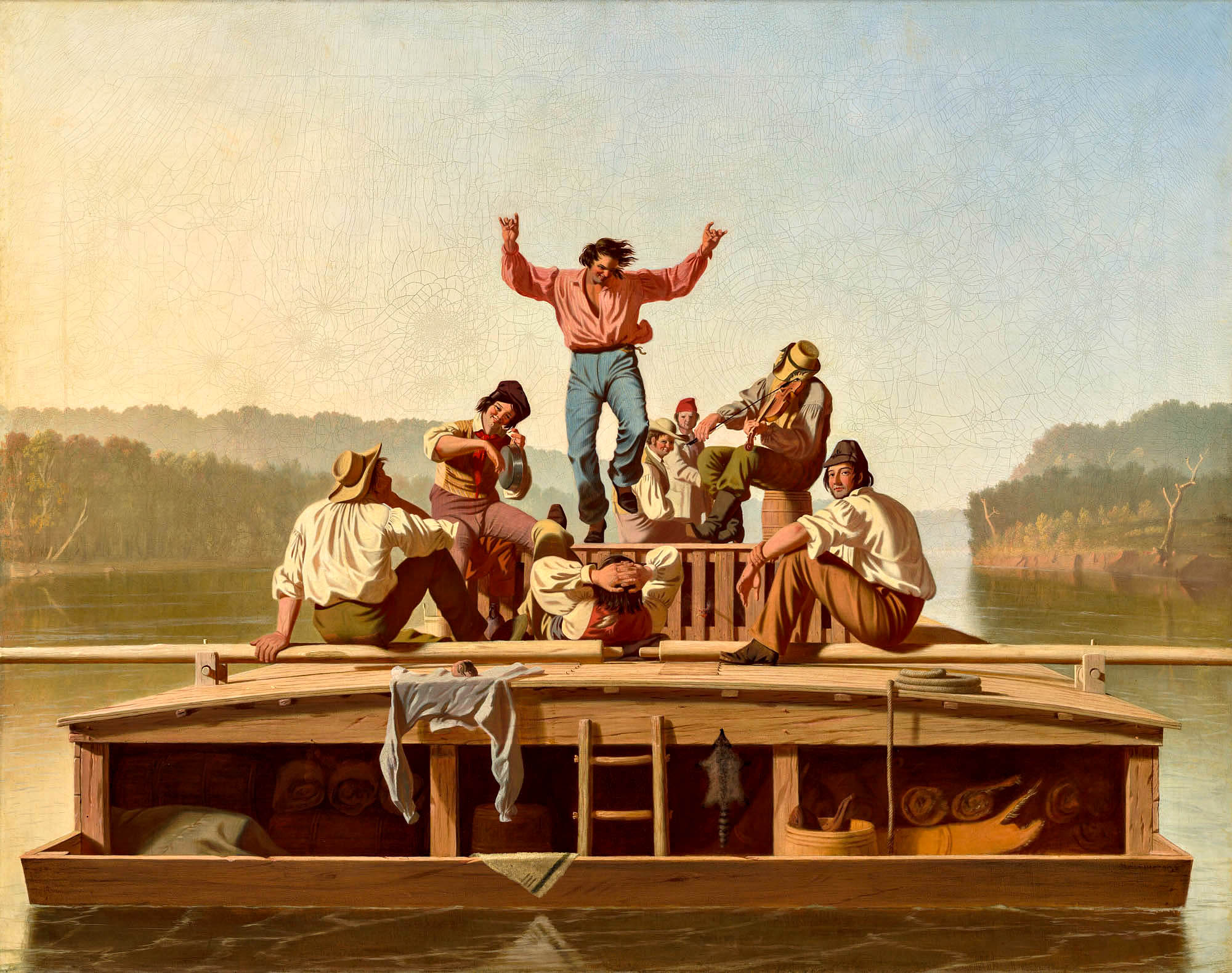
Public Domain via National Gallery of Art
Sand and gravel packed in the bows made a fire pit for cooking on board. Official rations for a crew for the whole trip consisted solely of bacon and cornmeal, and a lot of it.

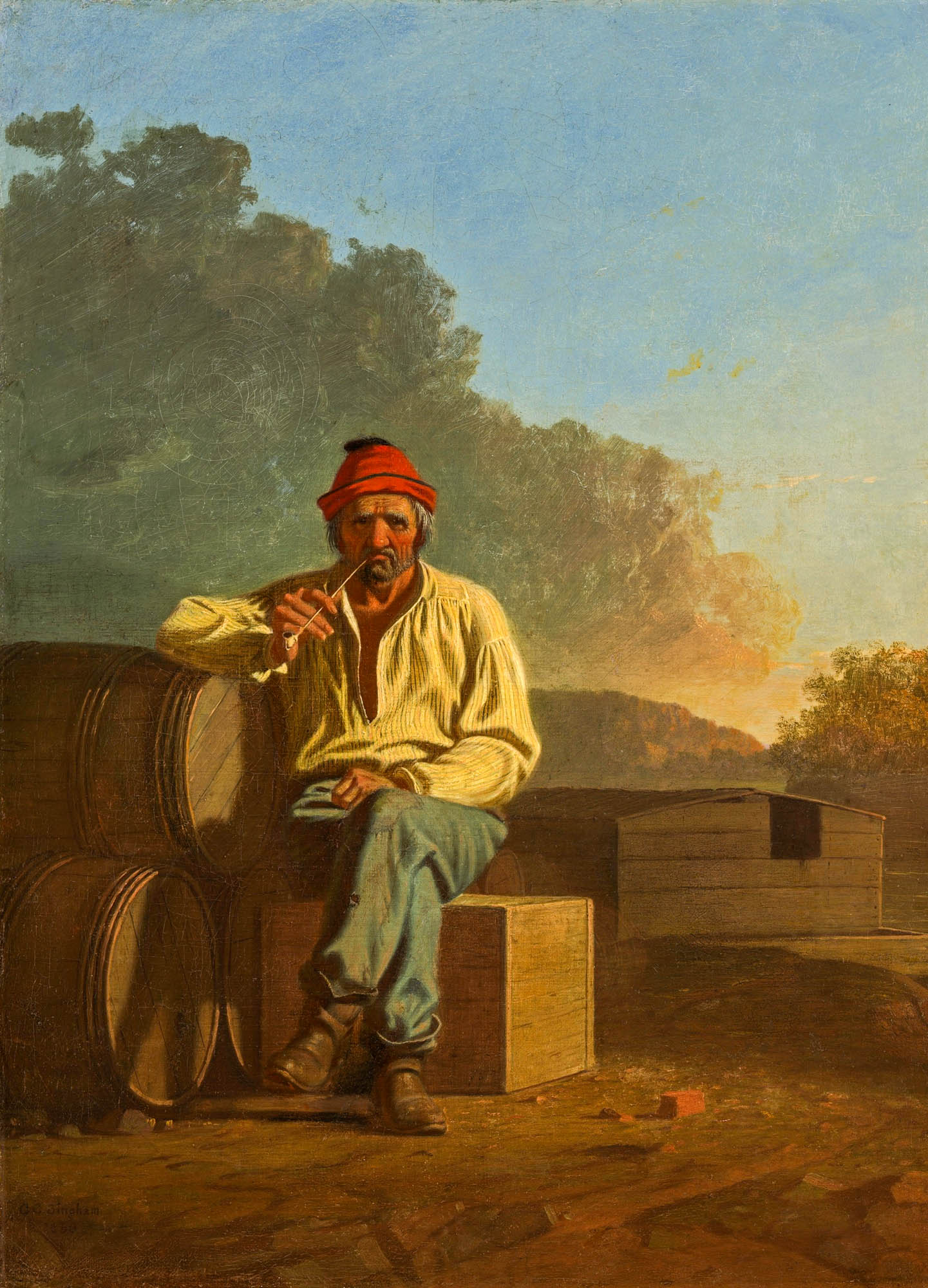

To add a bit of variety to the menu, fish and ducks were commonly taken with gun or hook. But chickens, cattle and hogs, and anything else from farms along the river that wasn’t nailed down was also fair game, along with much of everything that was. One plantation owner stipulated in his will, for instance, that he be buried along the river so he could continue to guard his fence rails from the thieving batteaumen.
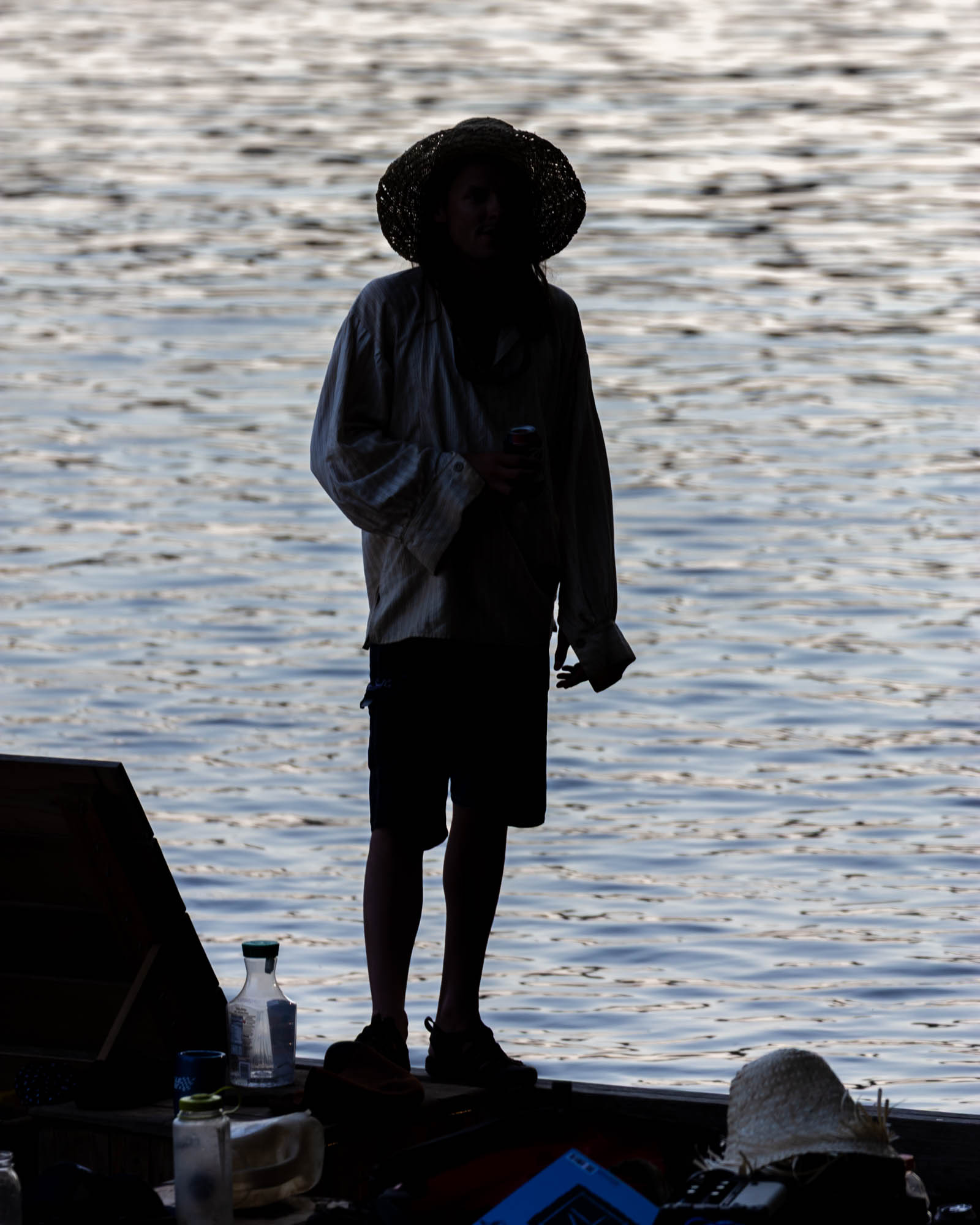
And, of course, the goods carried on the boats were not safe either. “Skimming” and “ducking” were common terms used for the art of arriving at the end of the journey with a boat notably lighter than when it began.

In particular, the “losing” of all or part of whiskey shipments only fueled the problem. Camps along the river at night were full of music and dancing. Grog Shops sprung up along the banks to service the elicit trade, along with remote “grocery stores” lining the river to buy and sell the stolen goods.


Aside from the loss of goods to pilfering, the changing river levels, dangerous rapids, and other natural hazards all contributed to loss of profits. Eventually, rampant thievery and other impediments to commerce created the demand for a way to regulate and expand the whole enterprise.
With the aid of the Virginia General Assembly, the James River and Kanawha Canal Company was formed with the purpose of improving navigable portions of the river. They would build a series of canals and locks to bypass rapids and persistent obstacles, charging tolls for the use. In addition to improvements to navigation, it created a network of inspection stations to check manifests – both to assess tolls and to be sure that what left Scottsville actually arrived in Richmond.
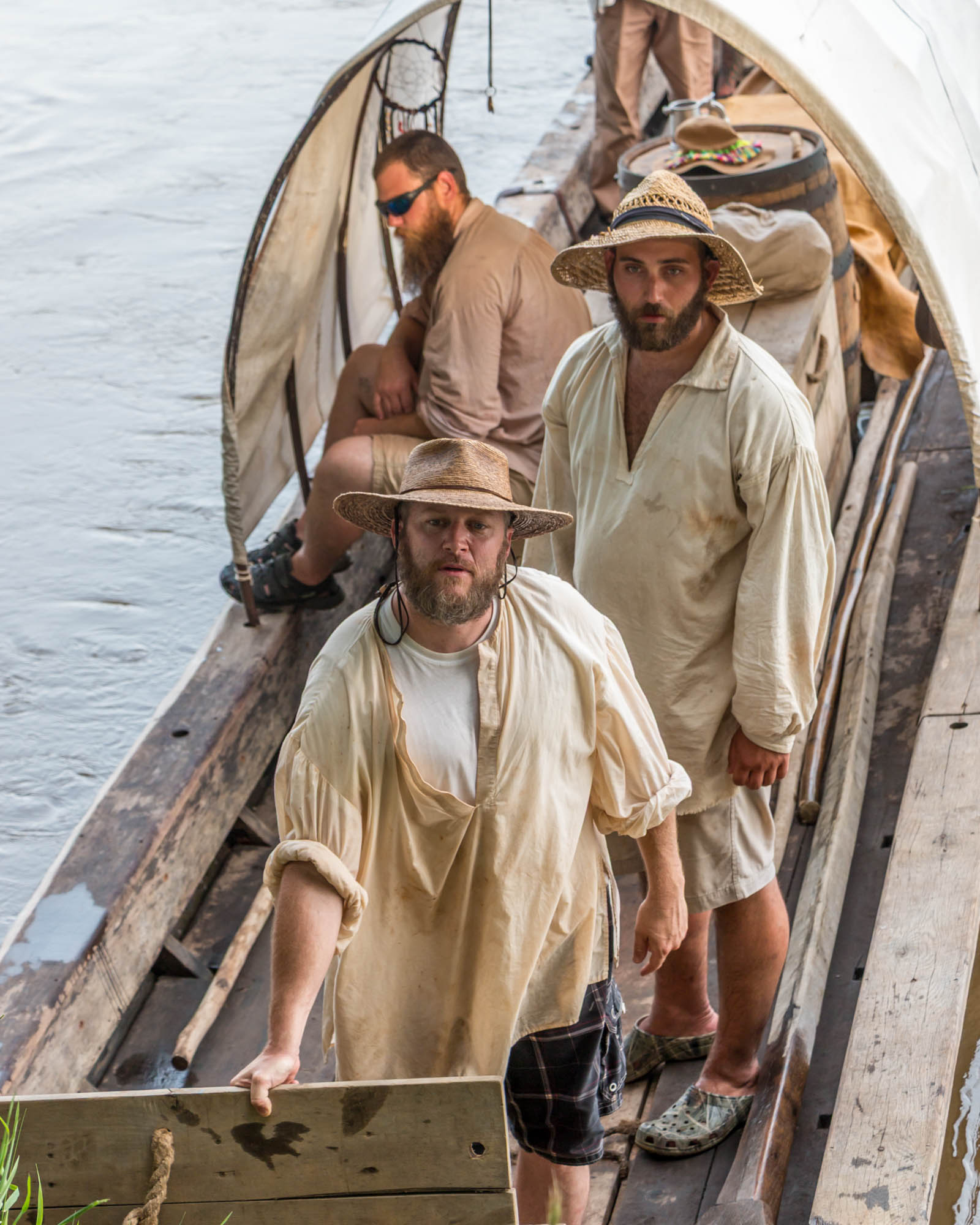
Construction progressed gradually over many years, and sections were put to immediate use as soon as completed. At the fall line in Richmond, a series of locks and a 13 acre turning basin allowed boats to bypass the treacherous falls and float the batteaux right up to ocean going ships to transfer their cargo, and to gain access to the warehouses that could safely store the goods. Canals, locks, aqueducts, and towpaths eventually lined much of the river between Richmond and Lynchburg, so the boats could be pulled upriver around rapids with mules.
A night in a local tavern could be followed with a morning in the local jail.
In Scottsville, another Canal Basin was constructed (where the park is now). Boats could tie up out of the current and wait to be loaded. The basin was lined with warehouses, bawdy taverns, and inns, some of which are still standing.
Scottsville became the center of regional commerce, a crossroads destination with barrels rolled in from the Valley over Rockfish Gap on the Plank Road. It became the county seat, serving both ends of the legal spectrum by adding a courthouse – so a night in a local tavern could be followed with a morning in the local jail.
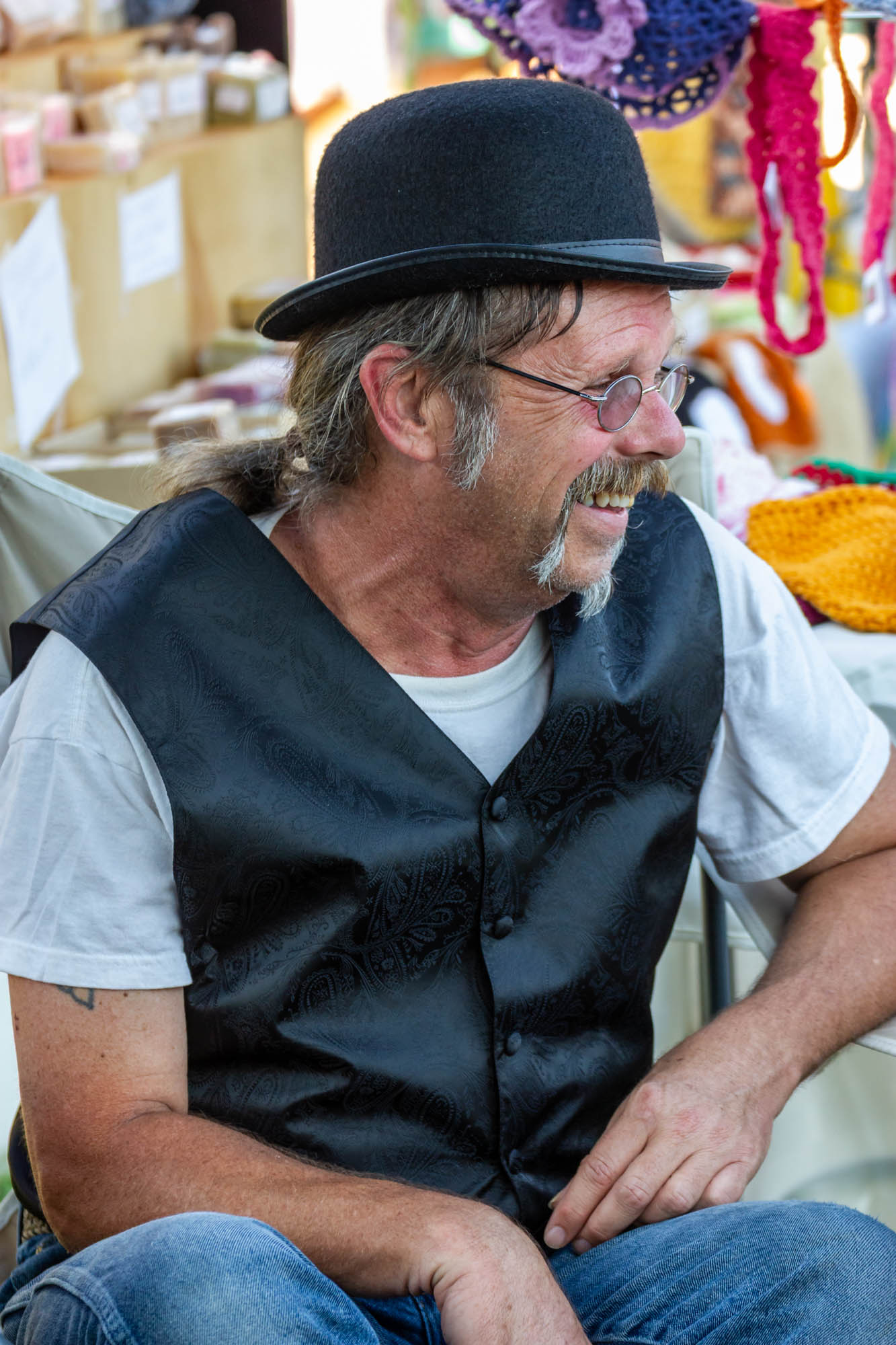
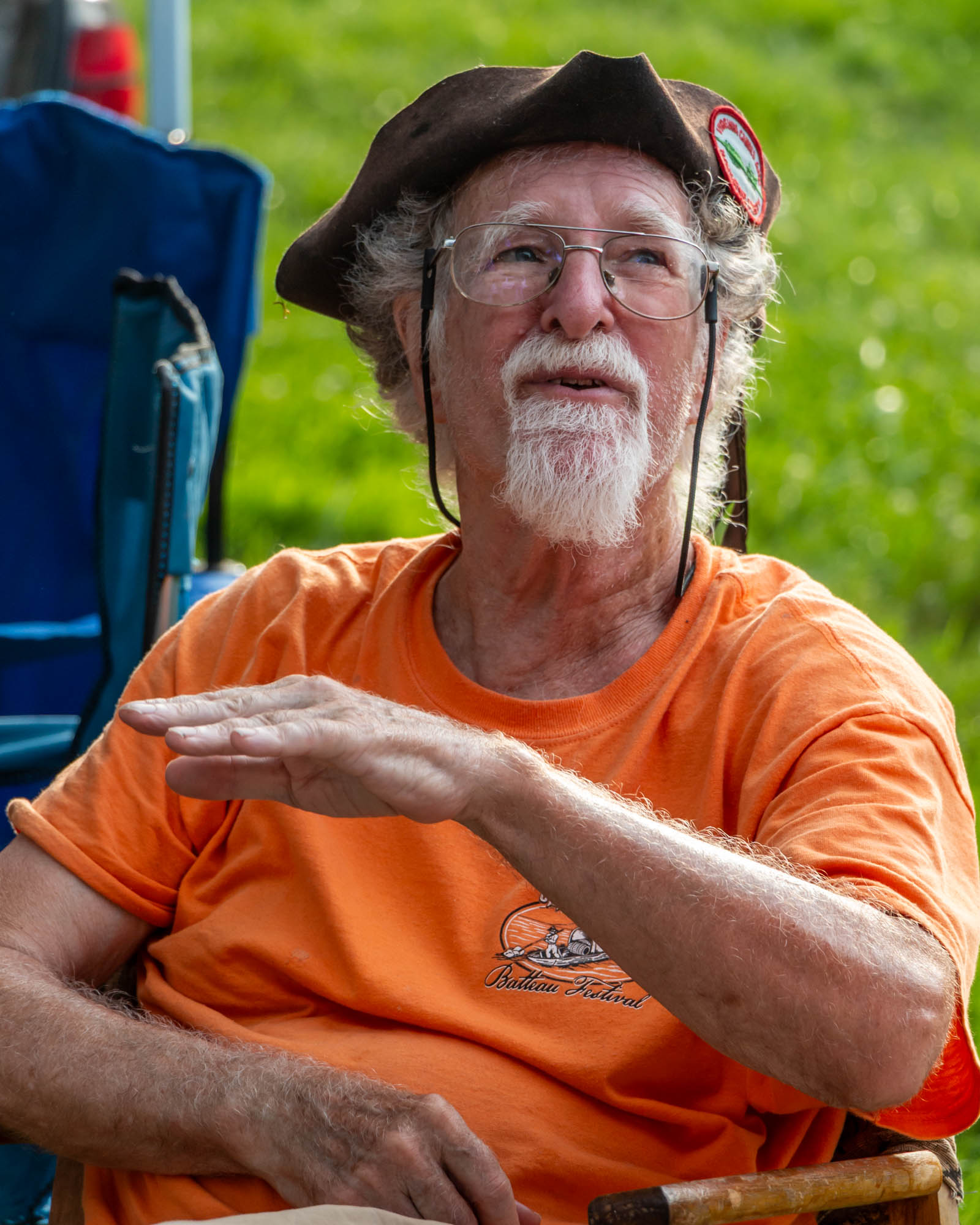
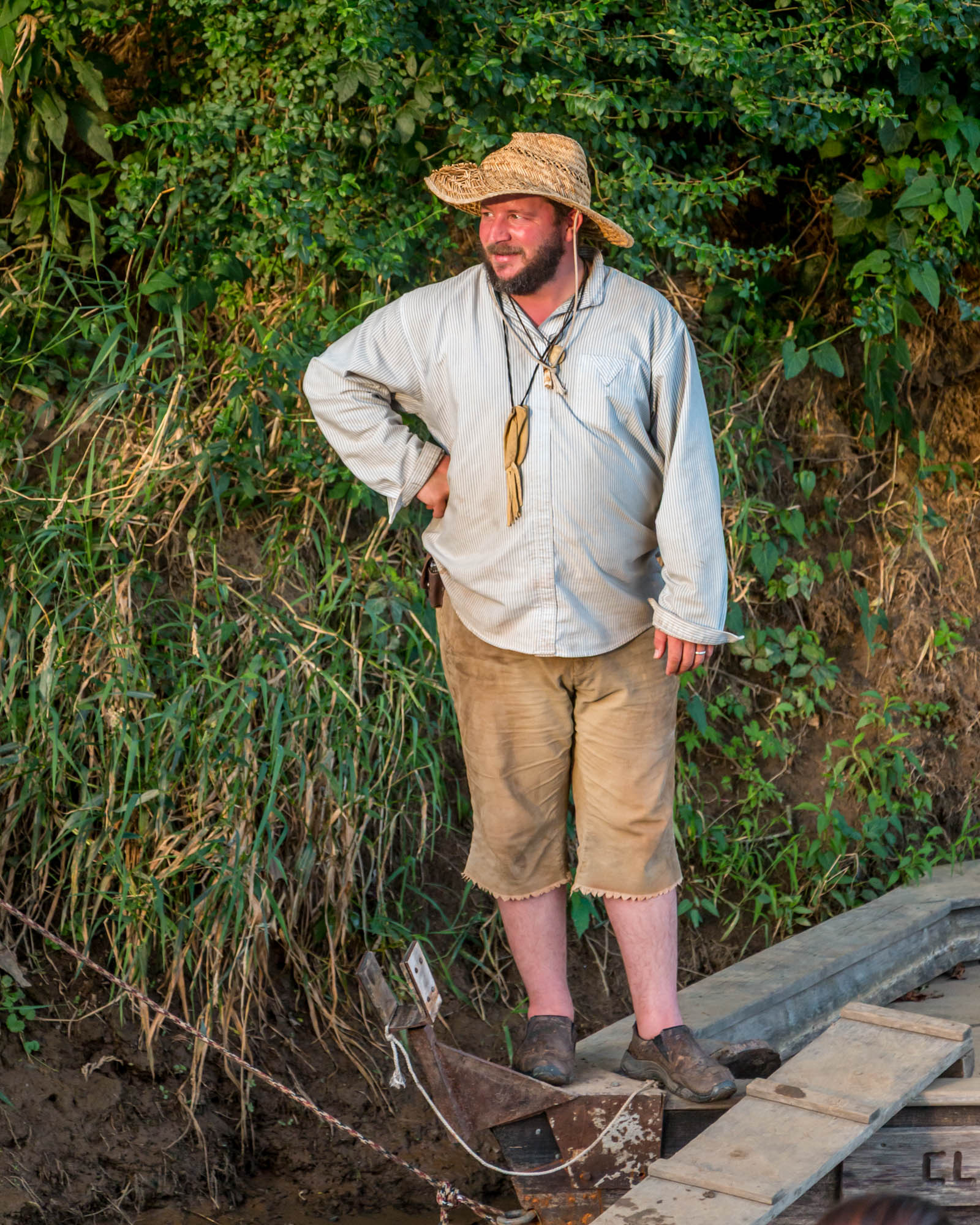
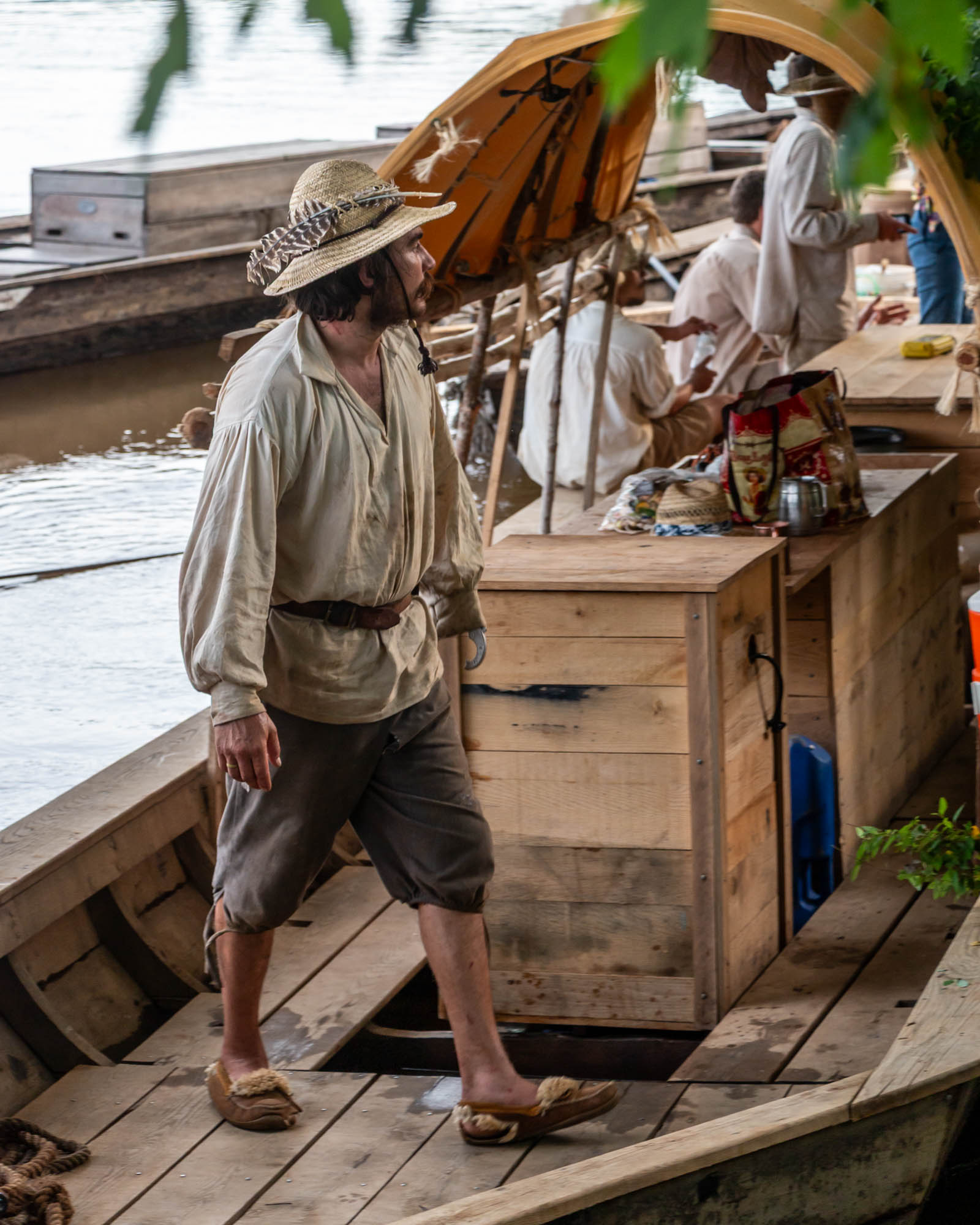


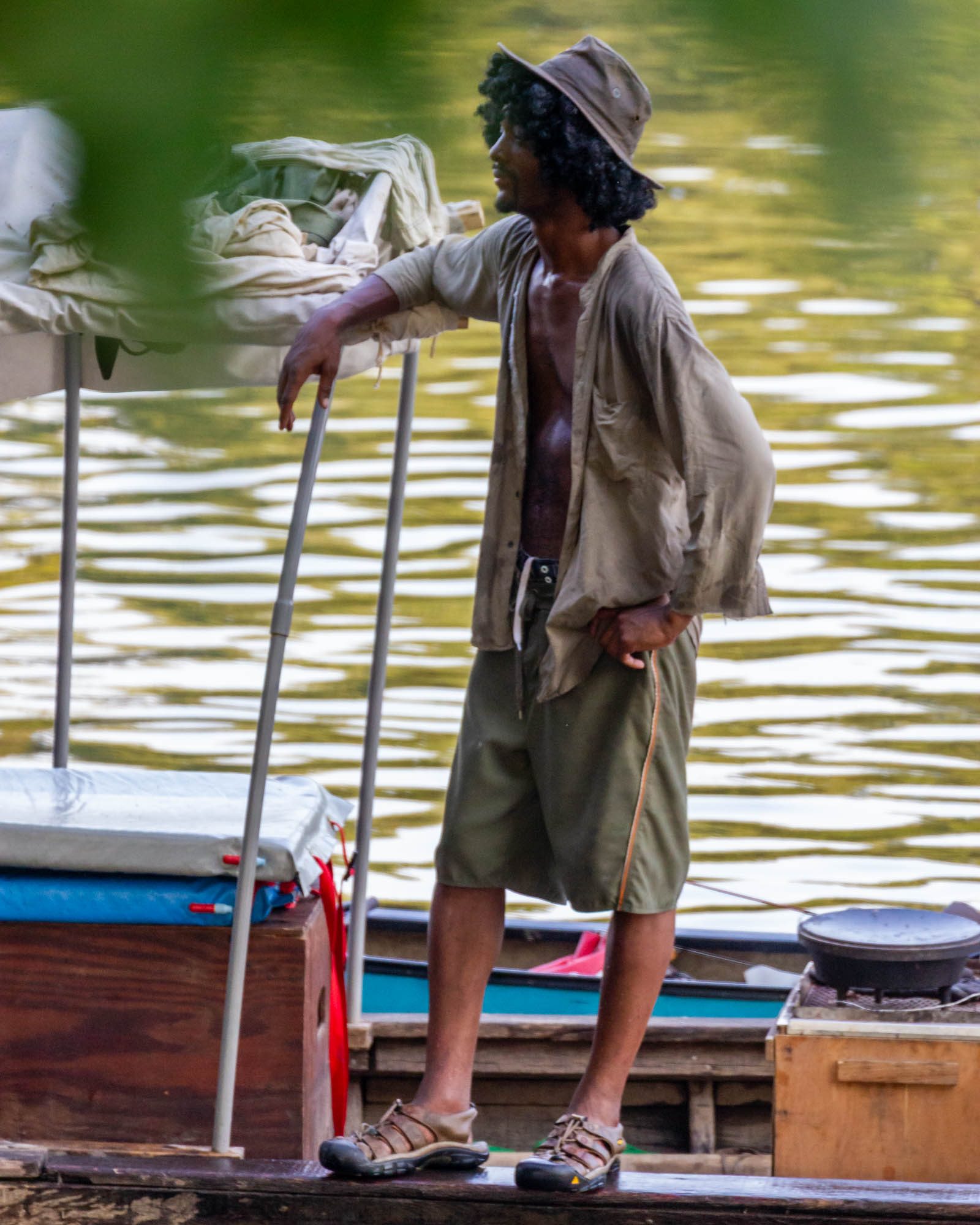
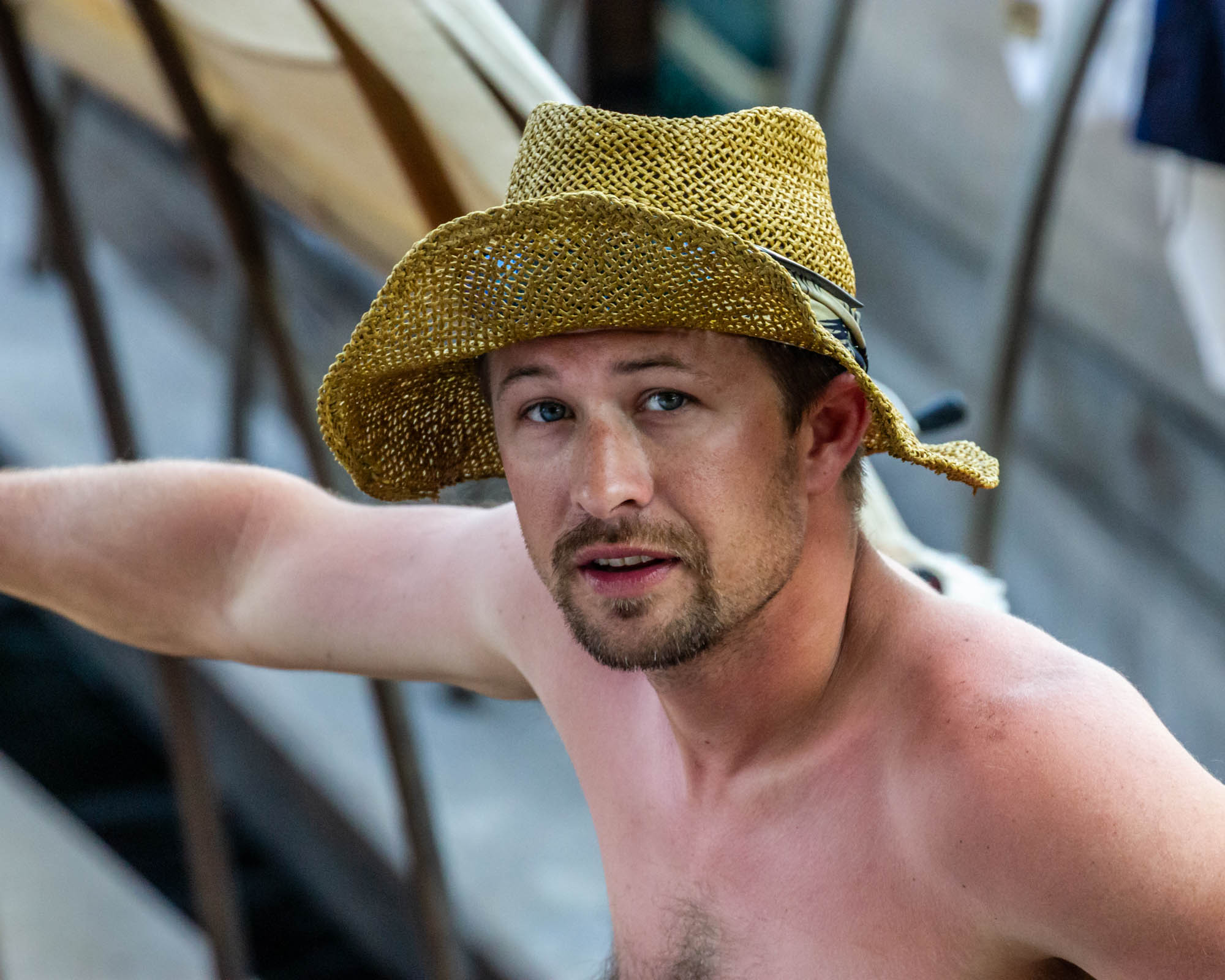


during the James River Batteau Festival
The canals made travel safe, and the improvements allowed construction of even larger boats – the Packet boats. These boats not only carried more tonnage, but became a popular means of travel for passengers, as well.
Riding on the cabin roof was especially pleasant, as one could enjoy the fresh air and watch the countryside glide by. The pilot would shout out “Low bridge!” and everyone scrambled below to avoid a bump on the head and subsequent swim in the canal. Sleeping and dining accommodations were provided inside out of the weather. This marked the peak of the canal era.
Far more posh accommodations than for the river batteaumen, who made it all possible.

– ) • 0 • ( –
Below is video of a dozen batteaux running the rapids at Hatton Ferry on their way to Scottsville for the 2026 James River Batteau Festival. These boats are carrying passengers rather than cargo, but it shows how sweeps and push poles are used to steer these big lumbering craft through rock gardens in low water.
Leave us a comment or share your story.